How can an exoplanet be at the right temperature but still not have liquid water? If we want to find an exoplanet that could host life like us, why does it matter what that planet is made of? Find out...
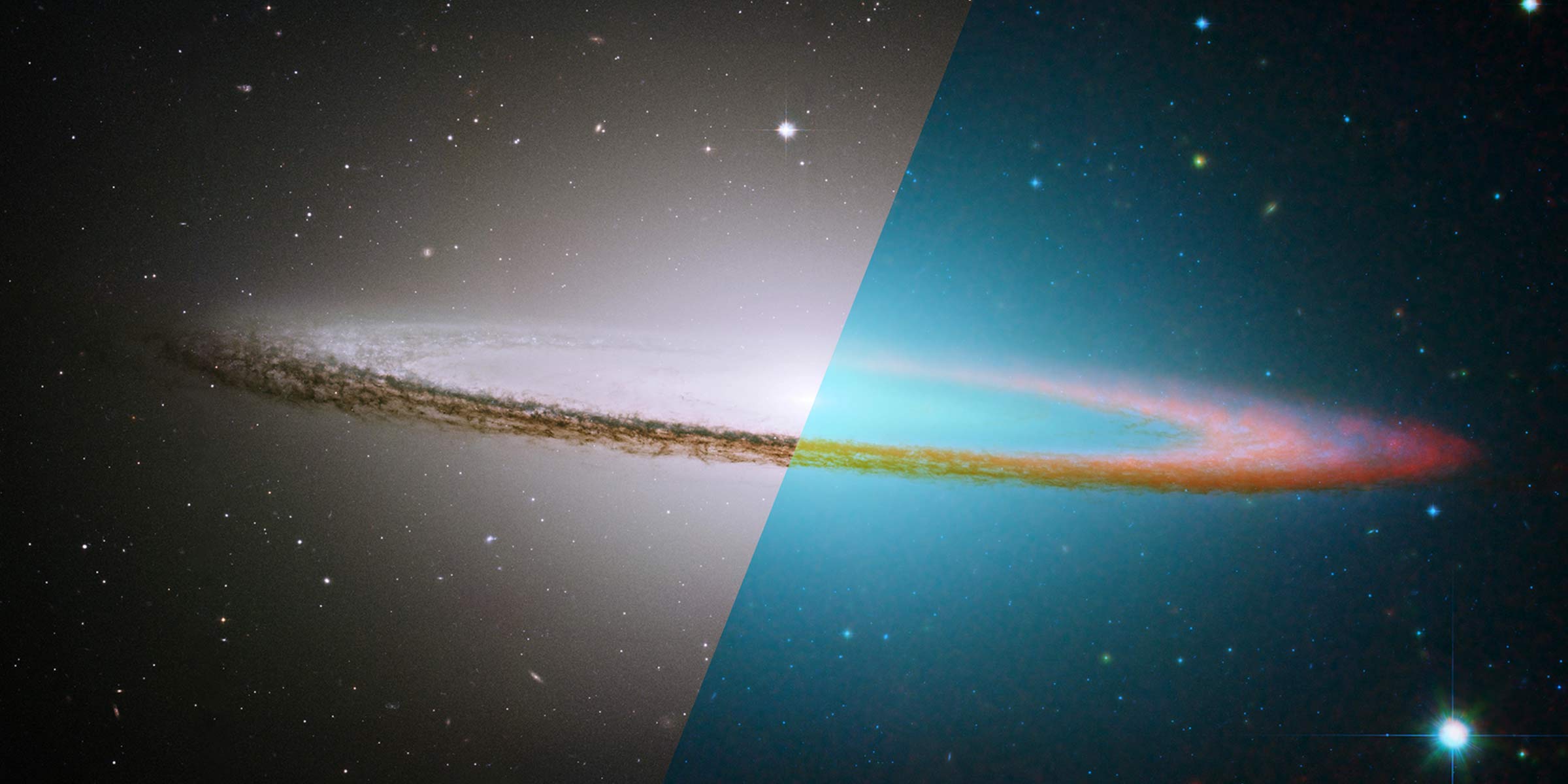
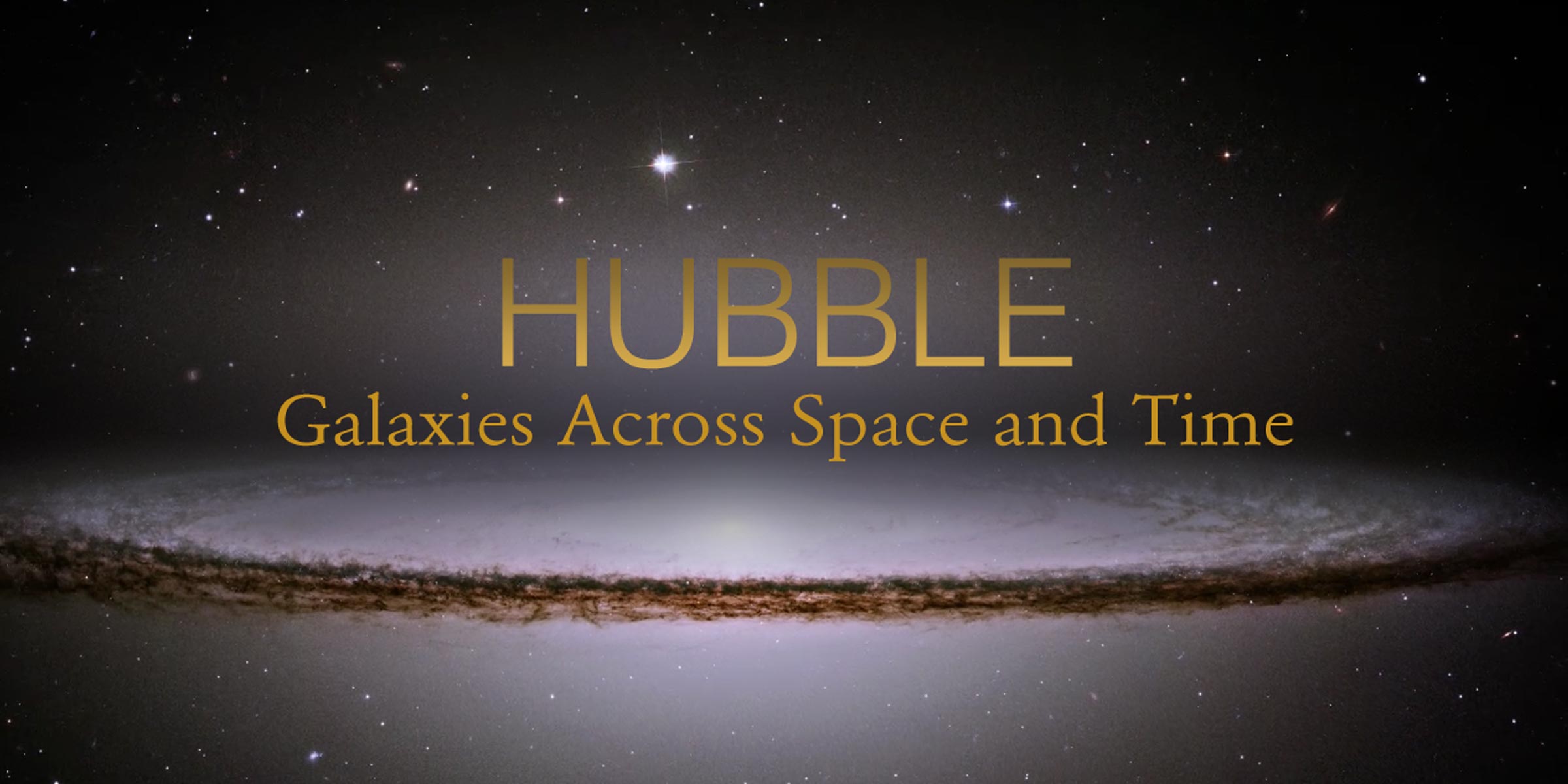
The Sombrero Galaxy has a distinctive ring of dust that circles a smooth bulge of stars. The galaxy's dust and inner flat disk are very clear in the infrared. The Sombrero Galaxy may be a spiral galaxy...
Get set for launch! Eyes on Exoplanets will fly you to any planet you wish – as long as it's far beyond our Solar System. This fully rendered 3D universe is scientifically accurate, allowing...
Human eyes have evolved to detect the rainbow of colors that make up visible light – but it is only one form of light. There are other types of electromagnetic radiation that human eyes cannot see....
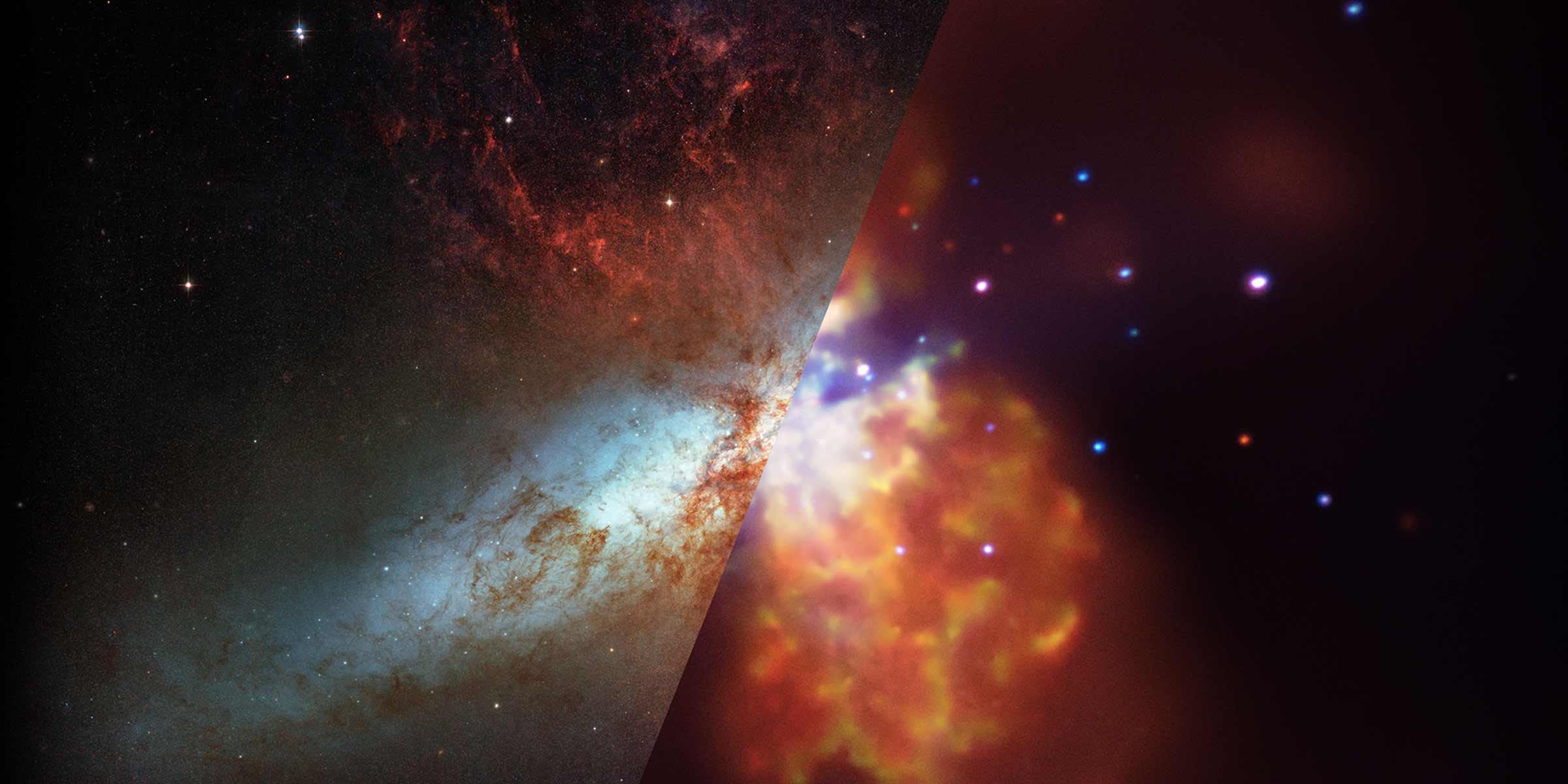
Messier 82, or the Cigar Galaxy, is an edge-on spiral undergoing a massive burst of star formation in its core. Many thousands of stars, and their surrounding gas and dust, have been stirred up. These...
Visions of the Universe: Four Centuries of Discovery portrays our changing views of the universe through time with images and text. The exhibit includes 12 panels that feature key astronomical discoveries...
Researchers have detected thousands of planets orbiting stars other than the Sun. The data show that these planets are even more varied than the planets and moons in our solar system. They range from small...
Our Solar System and Sun are located inside a pancake-shaped galaxy. Imagine a scale model where the plane of the Milky Way is a DVD, and the central bulge is a ping pong ball glued in the center. It is...
In 1604, astronomer Johannes Kepler noted the appearance of a new bright object in the sky, visible to the naked eye for the next 18 months. Today we know that he was seeing the death of a star 20,000...
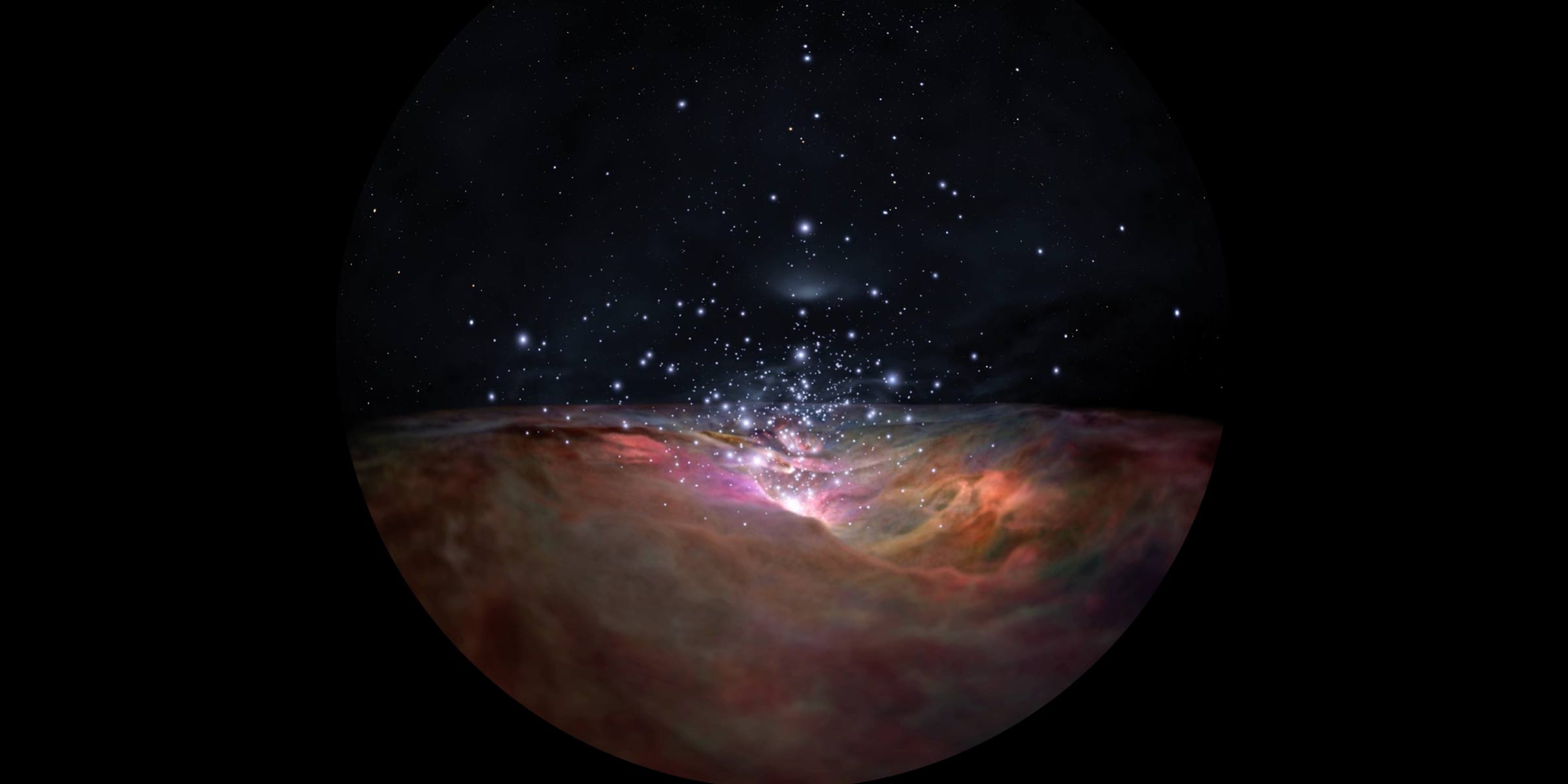
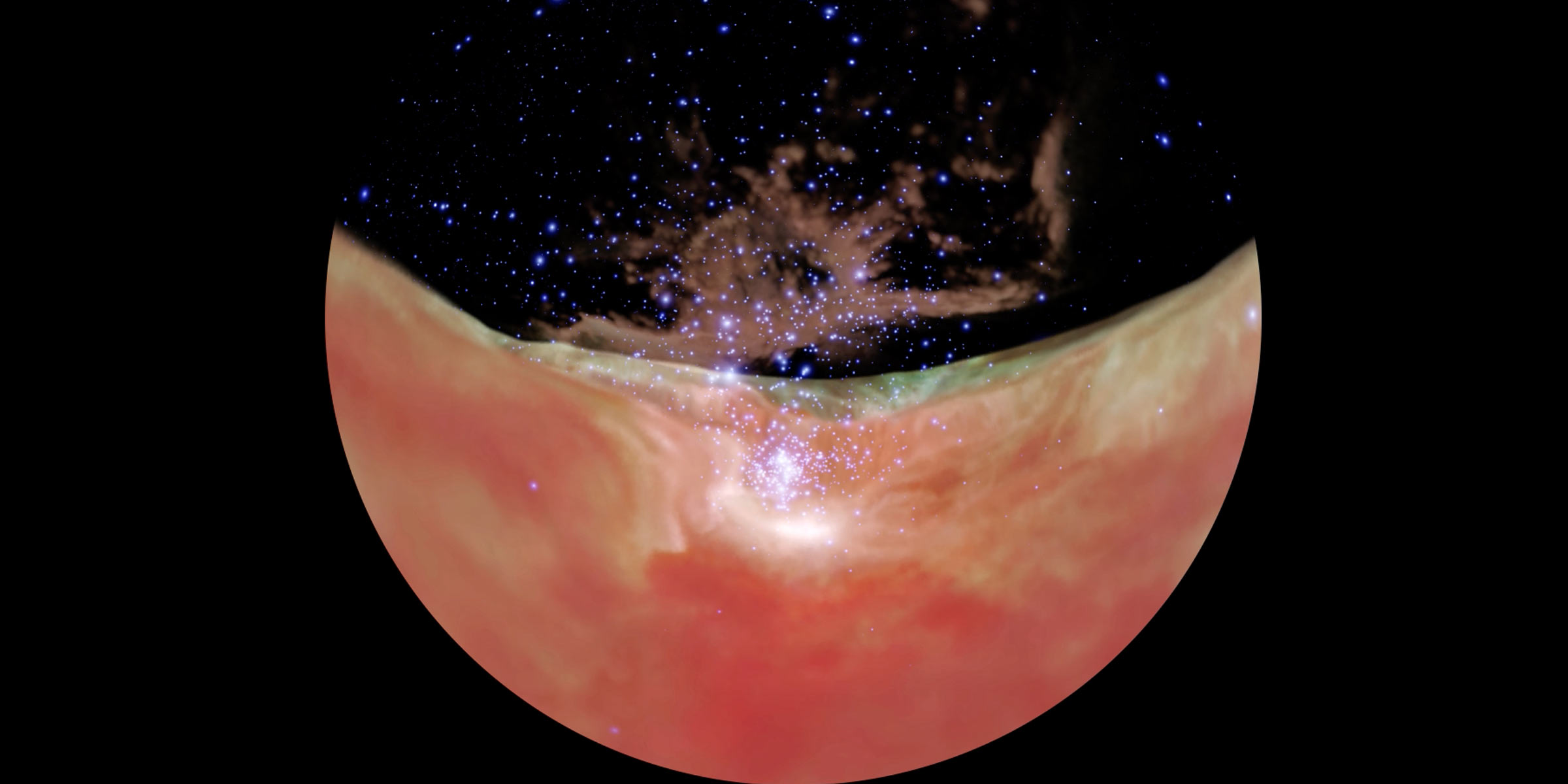
This version of "Flight Through the Orion Nebula in Visible Light" has been rendered onto a hemispherical format (azimuthal equidistant projection) for use in planetarium domes. The black circular...
This version of "Flight Through the Orion Nebula in Visible and Infrared Light" has been rendered onto a hemispherical format (azimuthal equidistant projection) for use in planetarium domes....
This version of "Flight Through the Orion Nebula in Infrared Light" has been rendered onto a hemispherical format (azimuthal equidistant projection) for use in planetarium domes. The black circular...
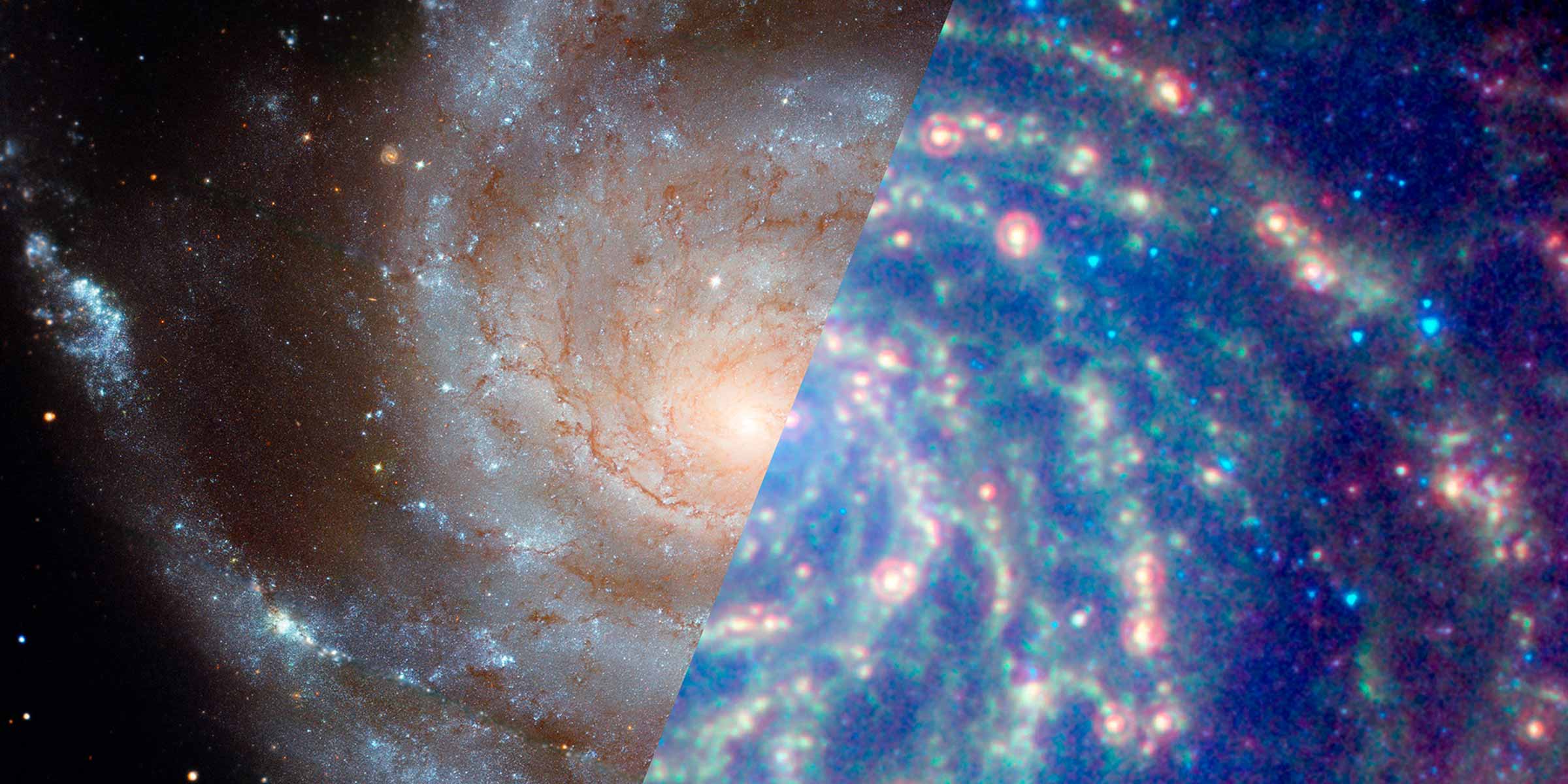
M101 is a comparable in size to the Milky Way. The disk is 100 billion solar masses, and the central bulge is about 3 billion solar masses. M101 is rich is pinkish star-forming regions, many of which are...
The AstroViz 2018 workshop provides an opportunity for professionals who create or use astronomical visualizations to enable science learning, literacy, and communication to meet, share techniques, and...
Scientists have detected thousands of exoplanets: planets orbiting stars other than the Sun. We have seen only a few exoplanets directly, but we can detect them by measuring the effects they have on the...
30 Doradus (the Tarantula Nebula) is a very bright and active star-forming region outside the Milky Way galaxy, at 160,000 light-years away. 30 Doradus is home to the central star cluster NGC 2070, including...
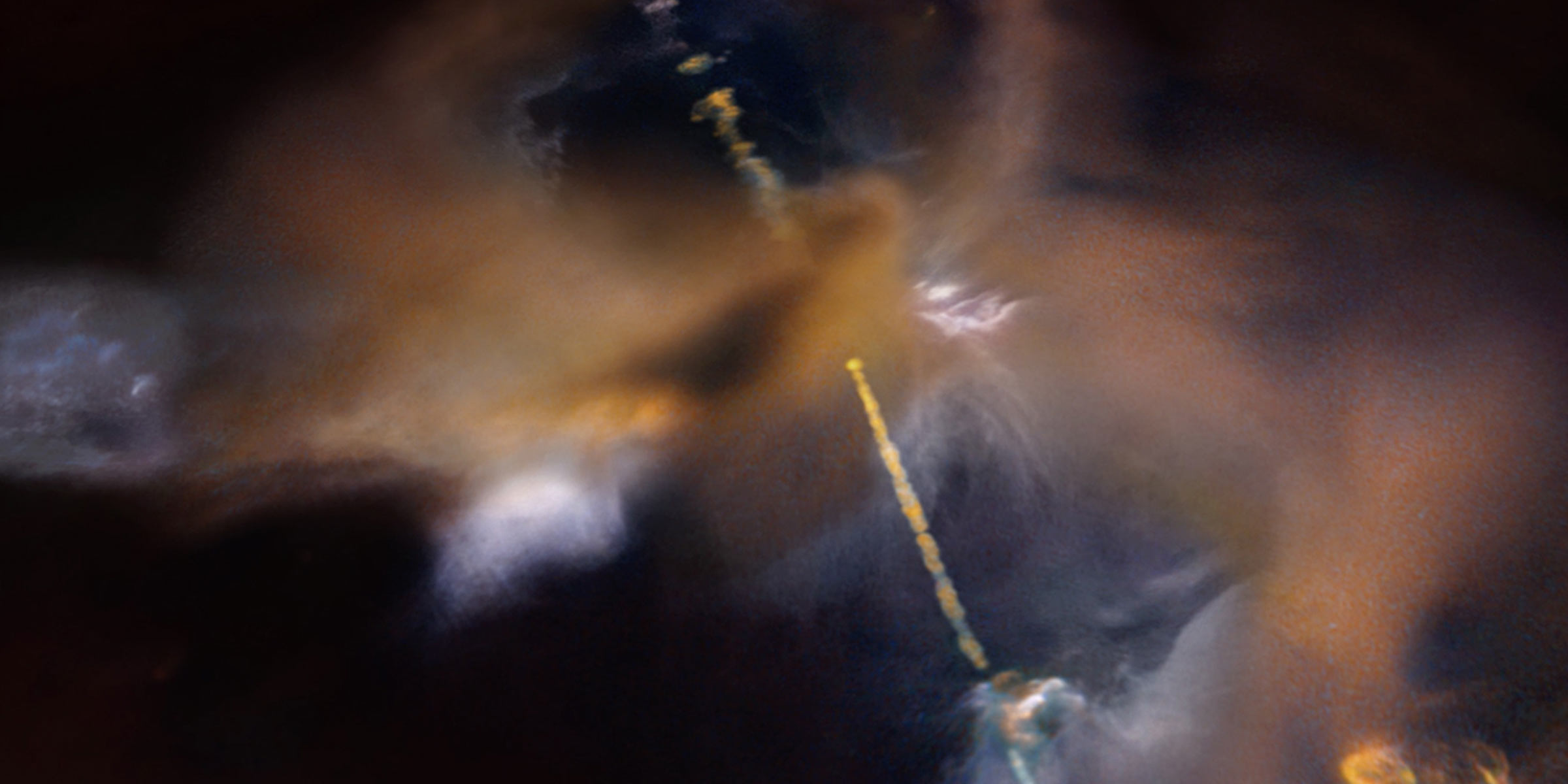
Herbig-Haro objects showcase the long thin jets of emission that emanate from newborn stars. This sequence combines a two-dimensional zoom and a three-dimensional flight to explore Hubble’s striking...
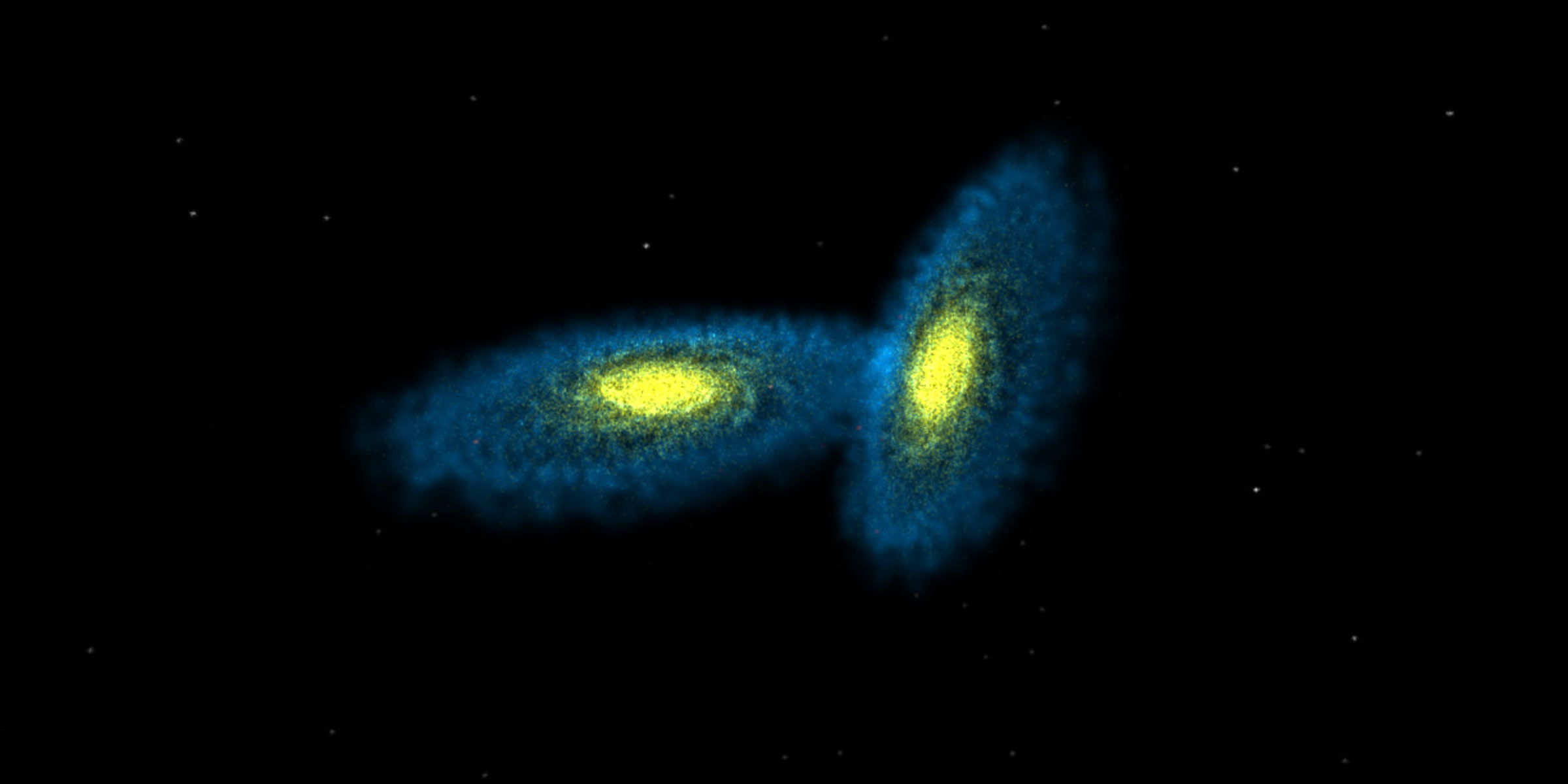
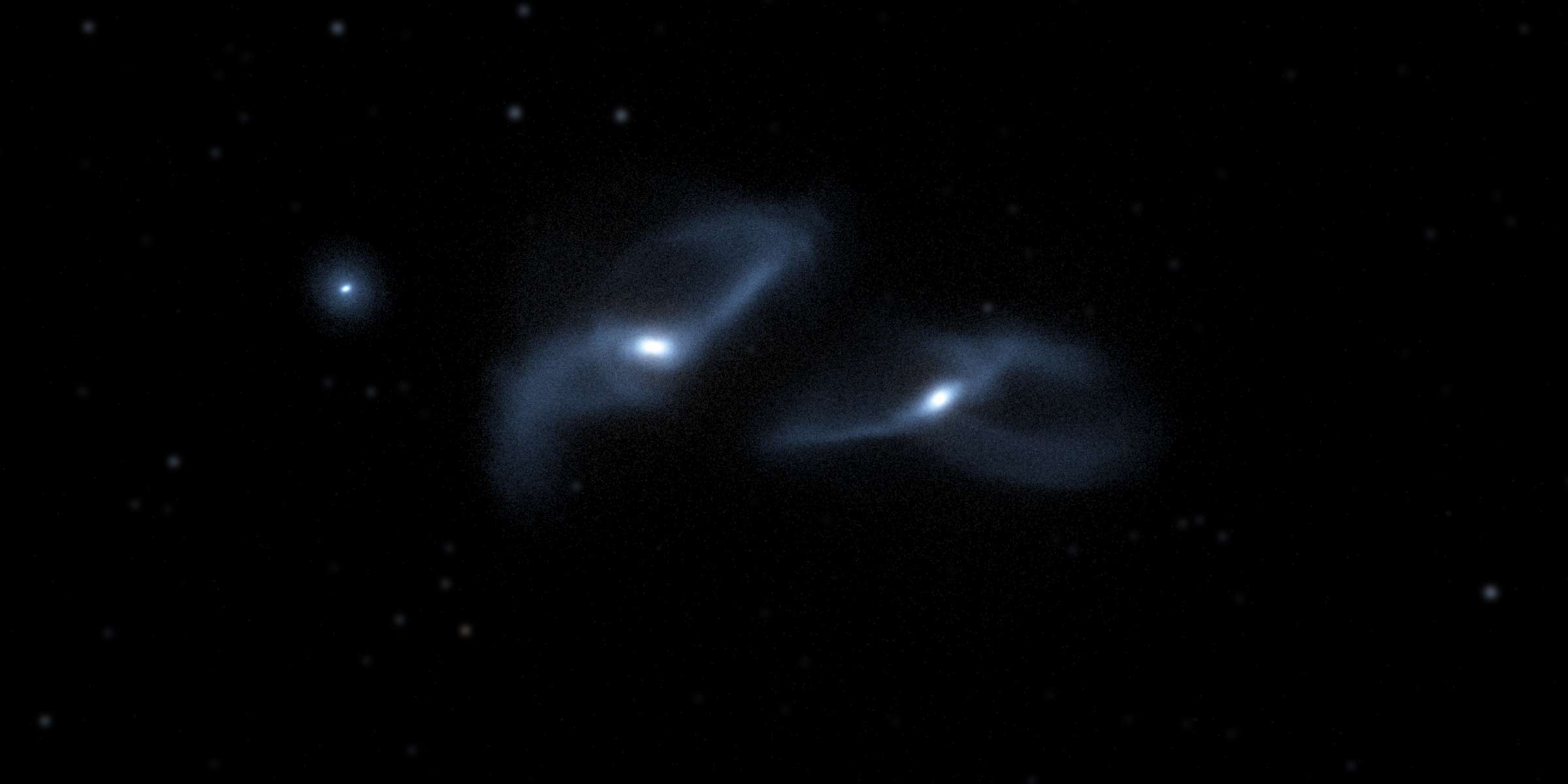
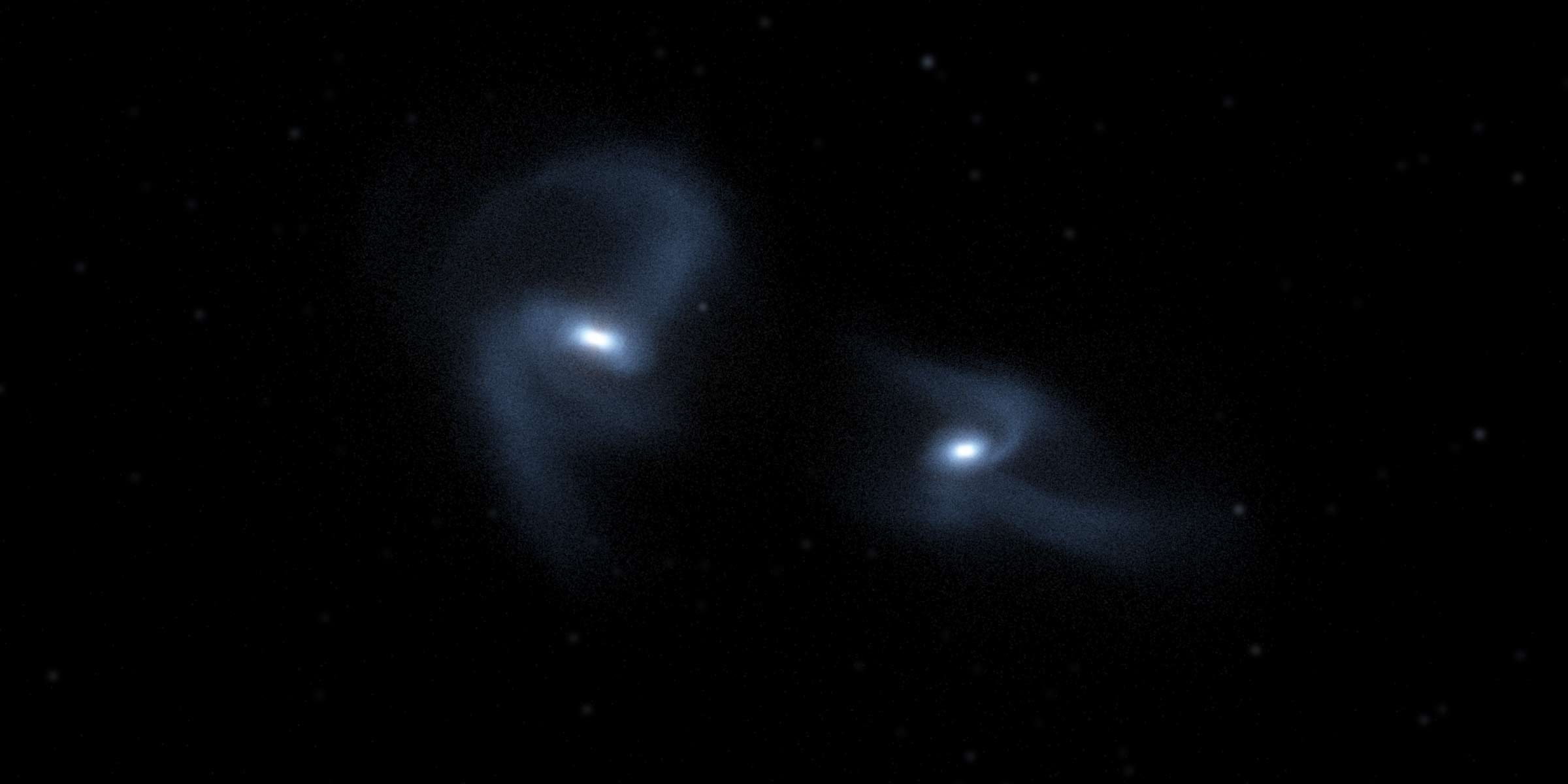
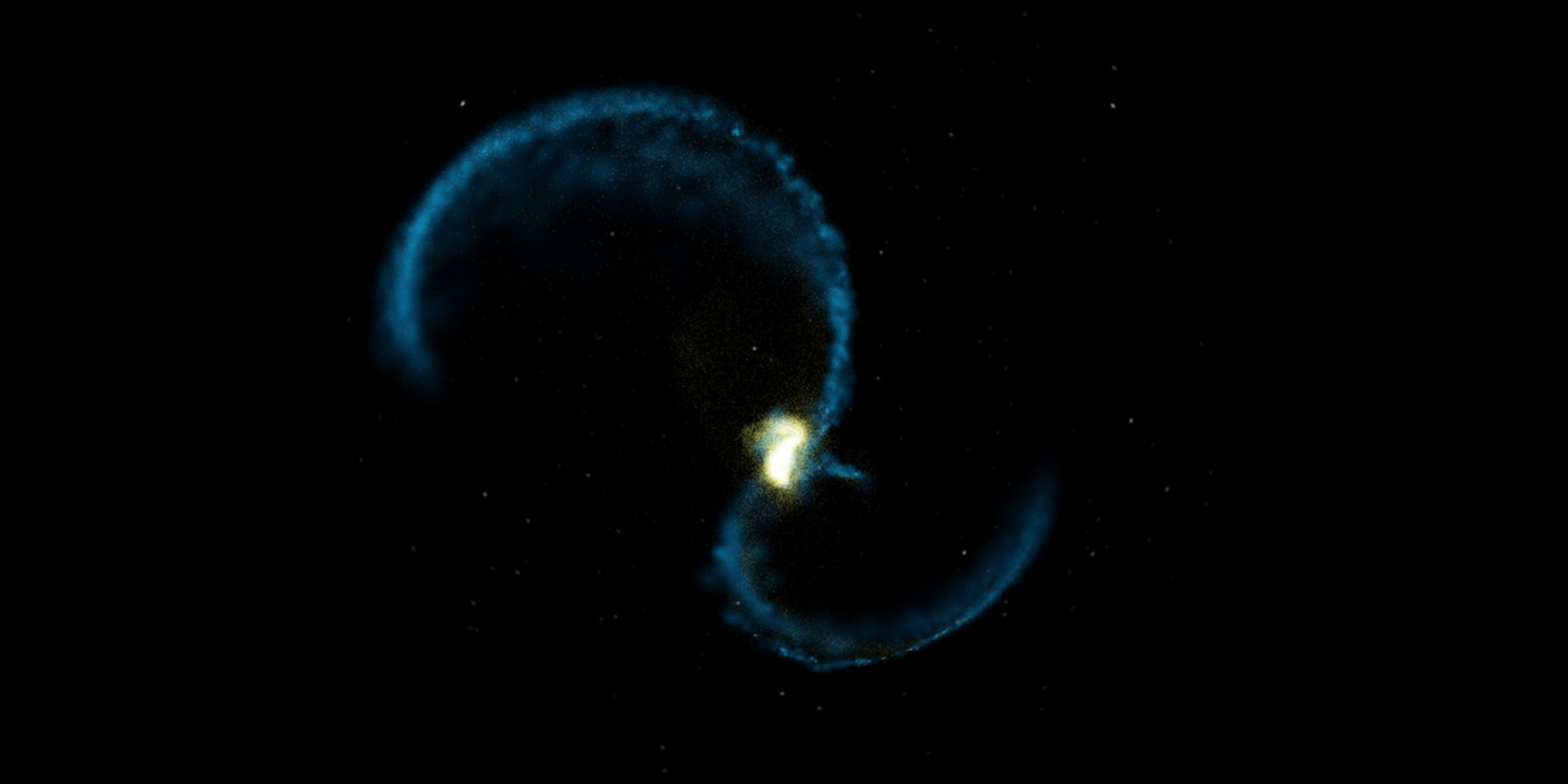
In this visualization of a computer simulation, two spiral galaxies are set on a collision course. As one slices through the other, both are disrupted. The tidal forces of gravity produce long tails of...
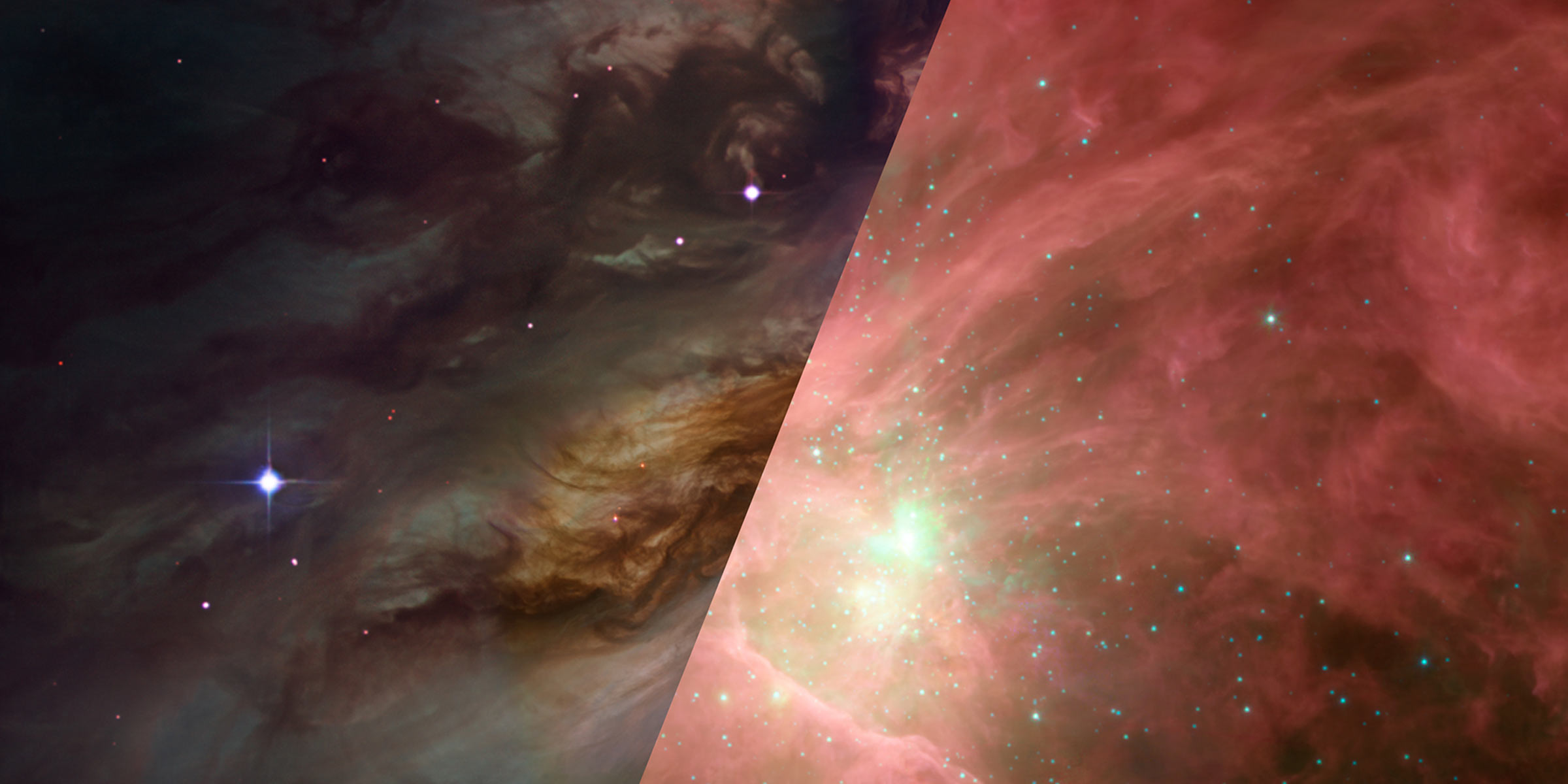
This sequence uses infrared (Spitzer) and visible (Hubble) images to reveal the formation of stars within a large cloud of hydrogen gas and dust. The warm gas lights up in the infrared view, appearing...
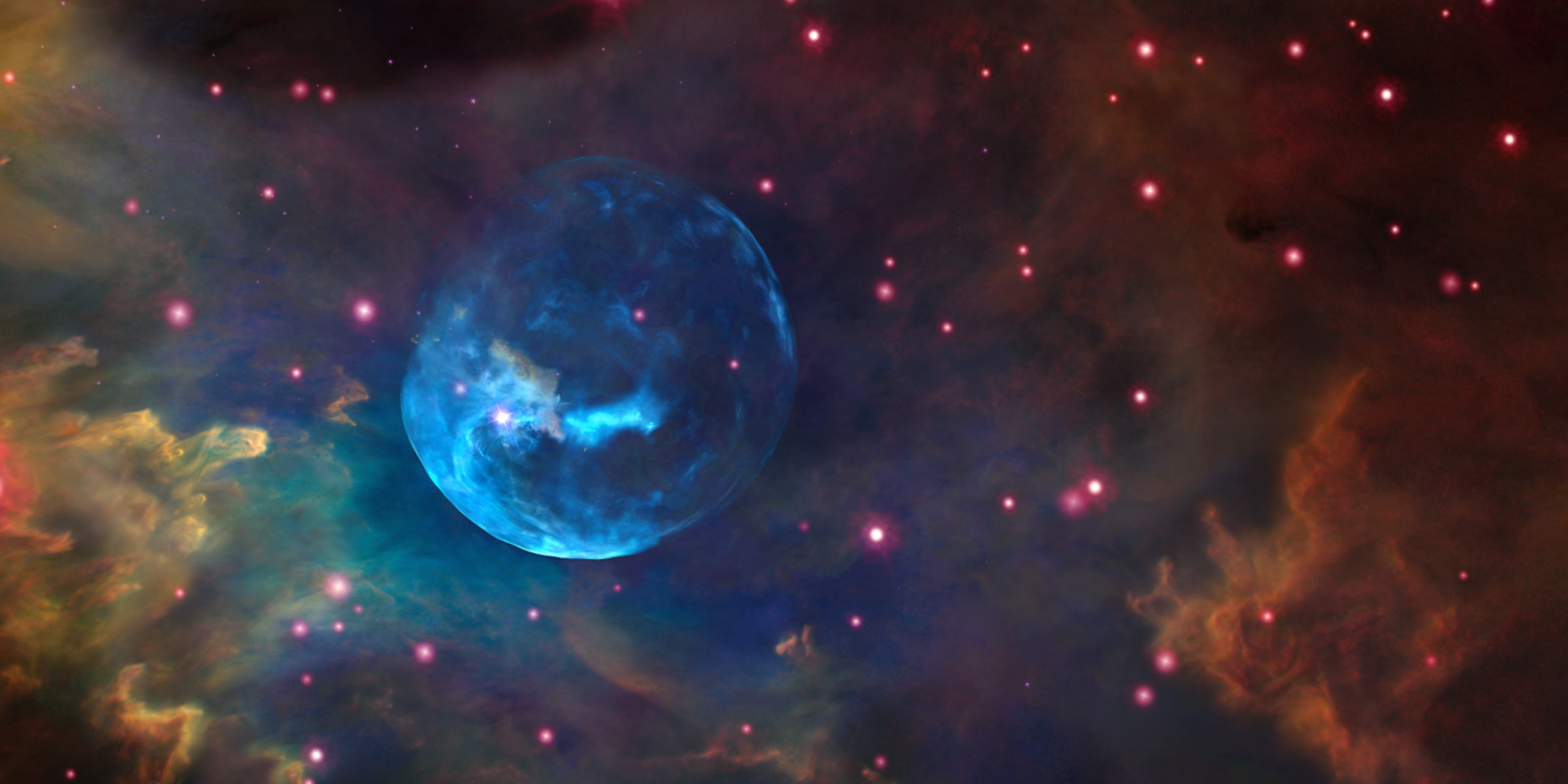
This visualization of the Bubble Nebula begins with a ground-based view that encompasses the glowing cloud. The high-energy light from the massive O star, BD +60°2522, is responsible for ionizing the...
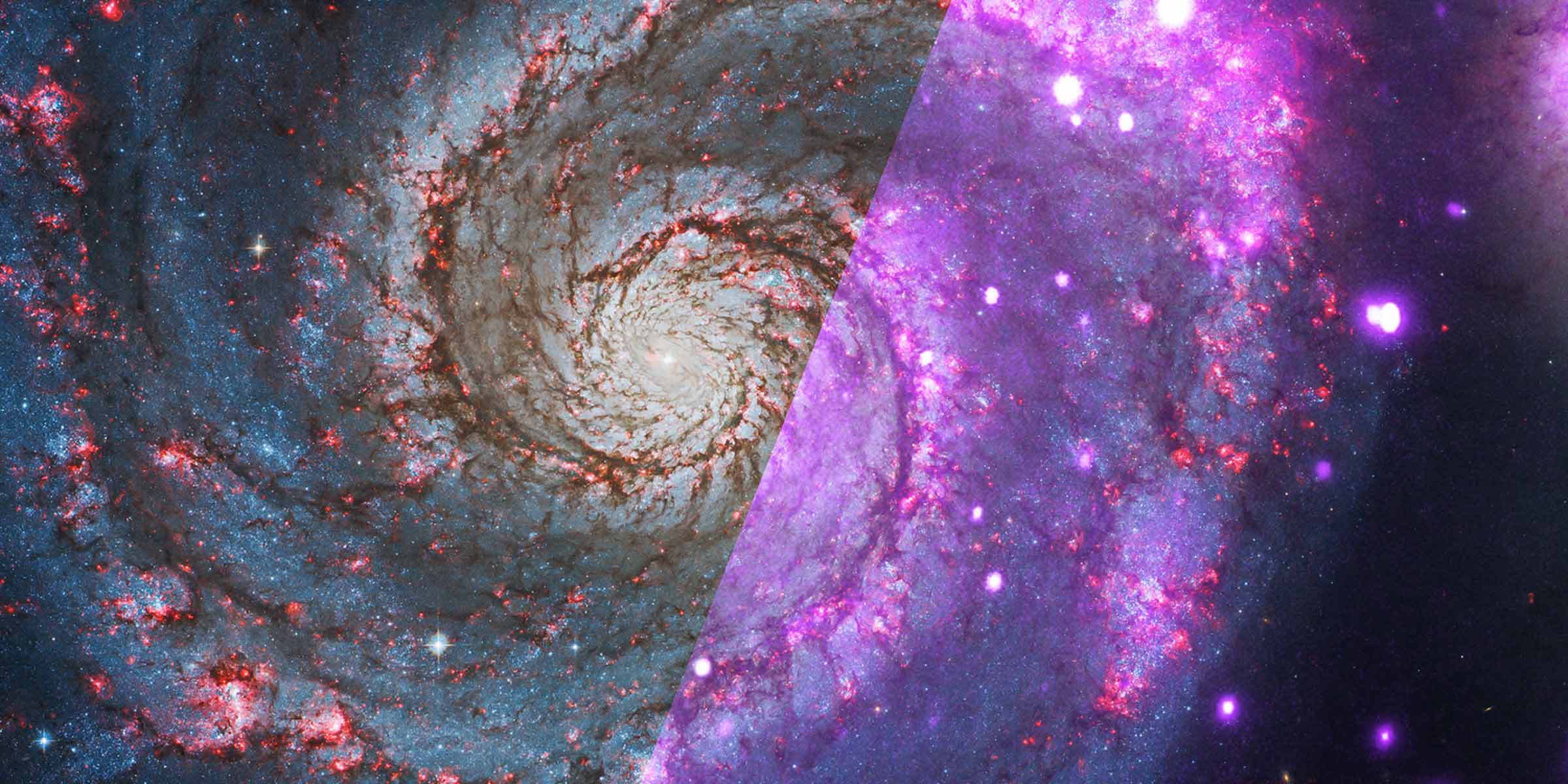
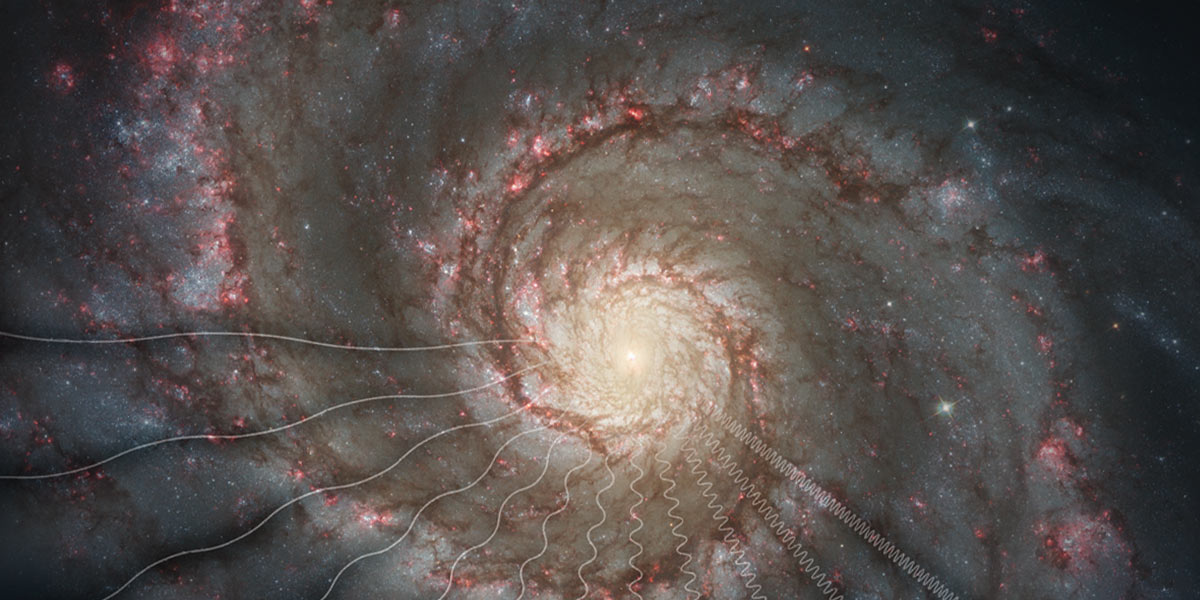
This sequence uses visible (Hubble) and X-ray (Chandra) imagery to highlight different structures within the Whirlpool galaxy (Messier 51). As seen in visible light, the familiar whirlpool shape is traced...
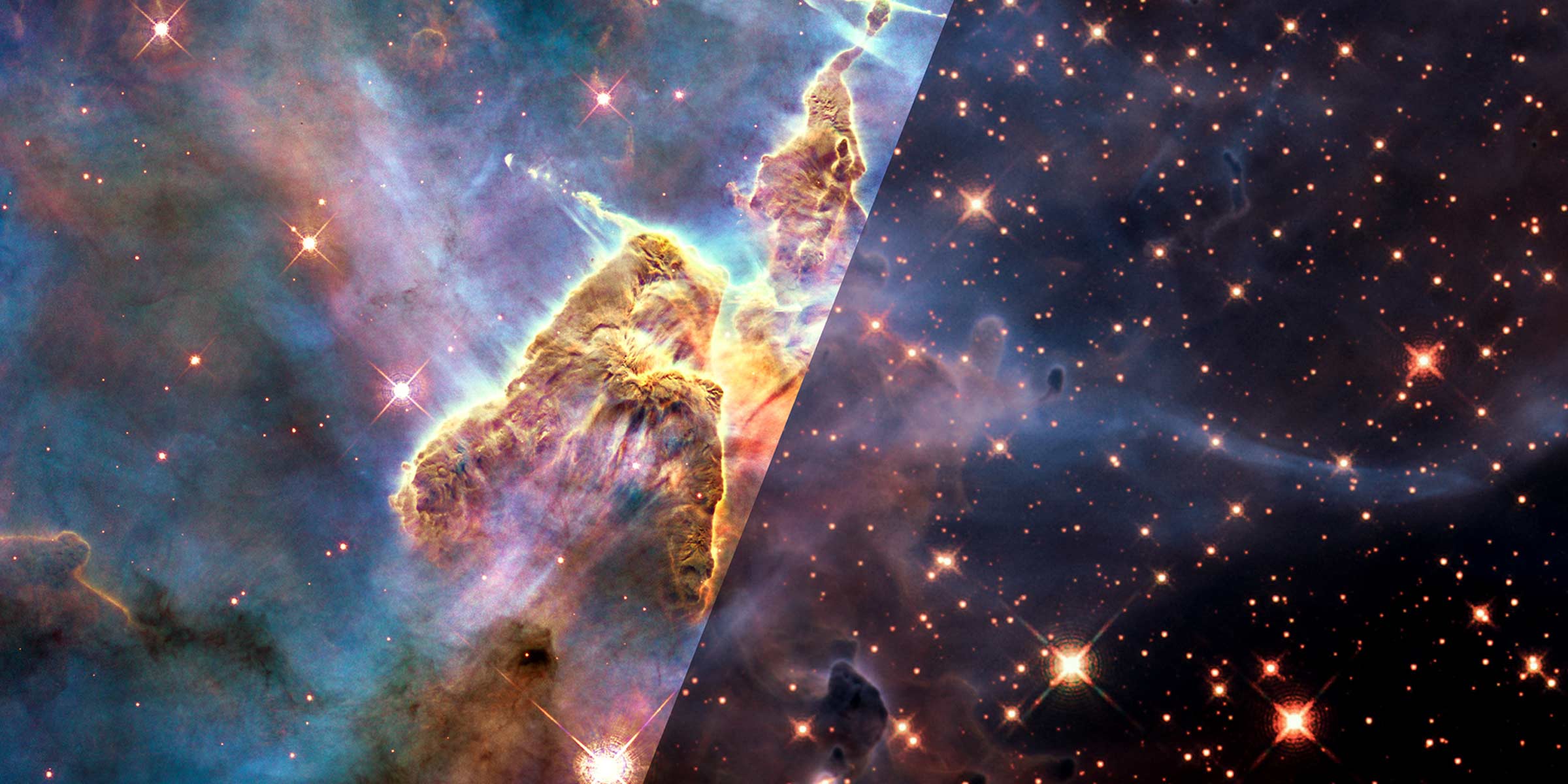
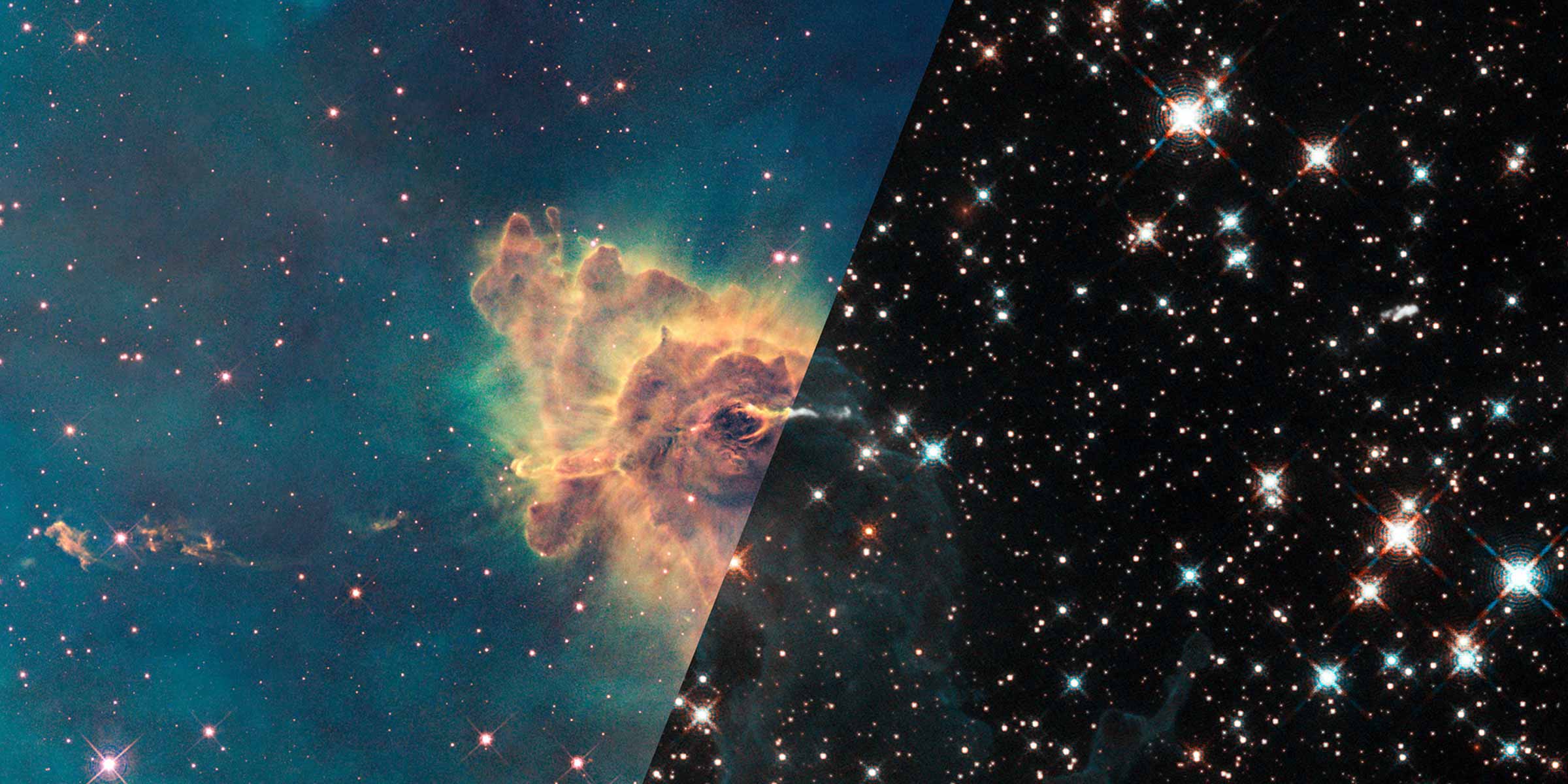
Herbig Haro 901 is an immense pillar of gas and dust inside the Carina Nebula, a huge star-forming region in our galaxy. The pillar is several light-years tall and contains a few massive young stars. They...
Herbig-Haro 666 is a young star that is shooting out narrow collimated jets in opposite directions. The jets are a byproduct of material falling onto to the star. The material is heated and then escapes...
Welcome to a new "one-stop shopping" experience that makes finding the right astronomy image easier than ever!
AstroPix offers publicly accessible image galleries of many of the leading astronomical...
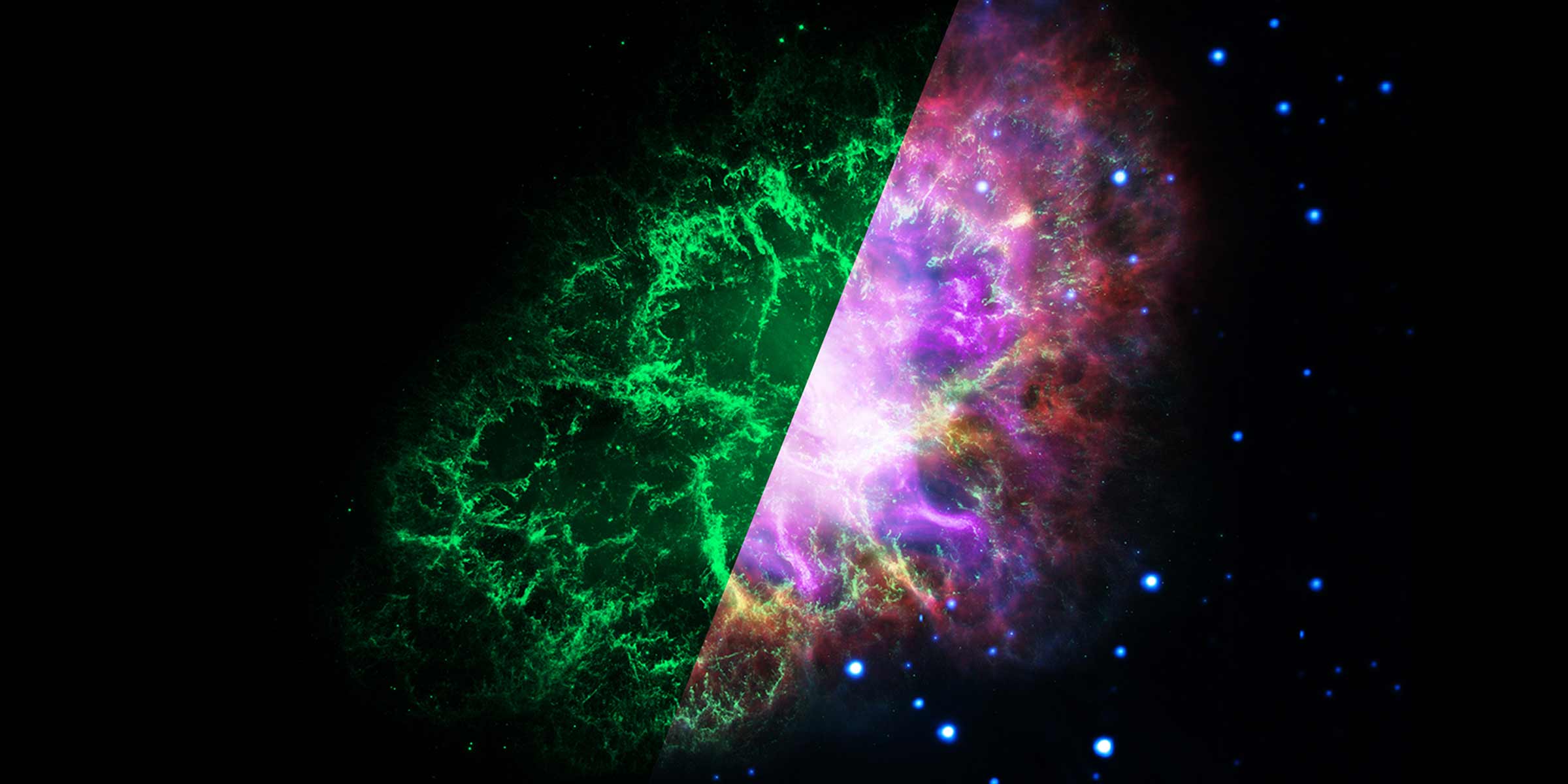
The Crab Nebula (Messier 1) is the remnant of a supernova that exploded in the year 1054 AD. This mysterious “new star,” as early sky watchers called it, was observed around the world and most...
Where do stars come from? A science expert (Jerrika Hinton) explains by hooking her hapless assistant (Wil Wheaton) up to a Thought Visualizer, a machine that allows anyone to see his thoughts. With Ed...
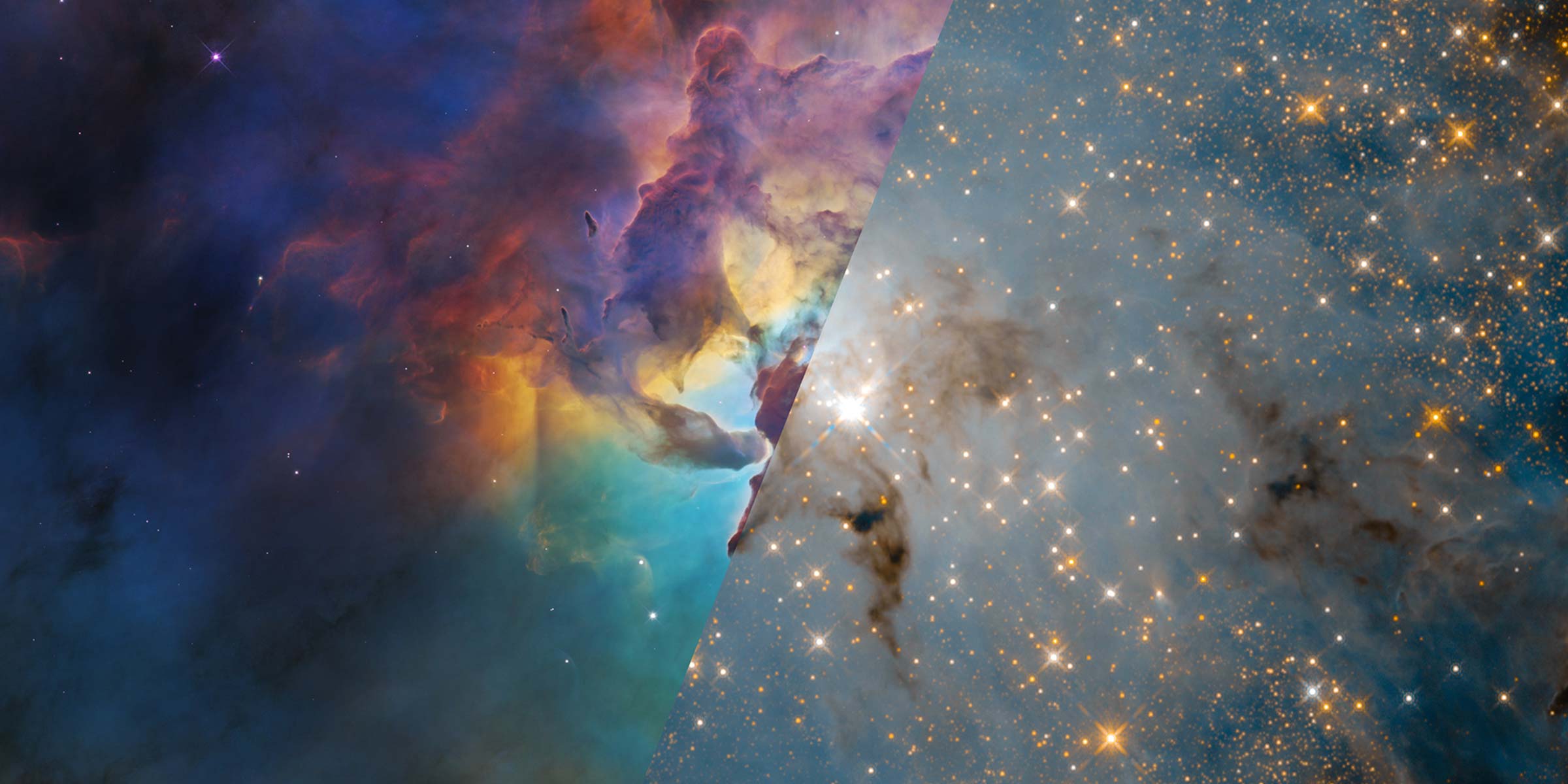
This visible-light image of the central region of the Lagoon nebula reveals a fantasy landscape of ridges, canyons, pillars, and mountains of gas and dust surrounding a very hot newborn star. When the...
Not all stars shine consistently! Some stars temporarily increase in brightness for several days or weeks, while others have periodic changes in brightness. In other examples, stars change in brightness...
Stars are formed as part of an amazing recycling process, in which gravity shapes new stars from the gas and dust expelled by old stars. What happens as they form? Slide through several examples, including...
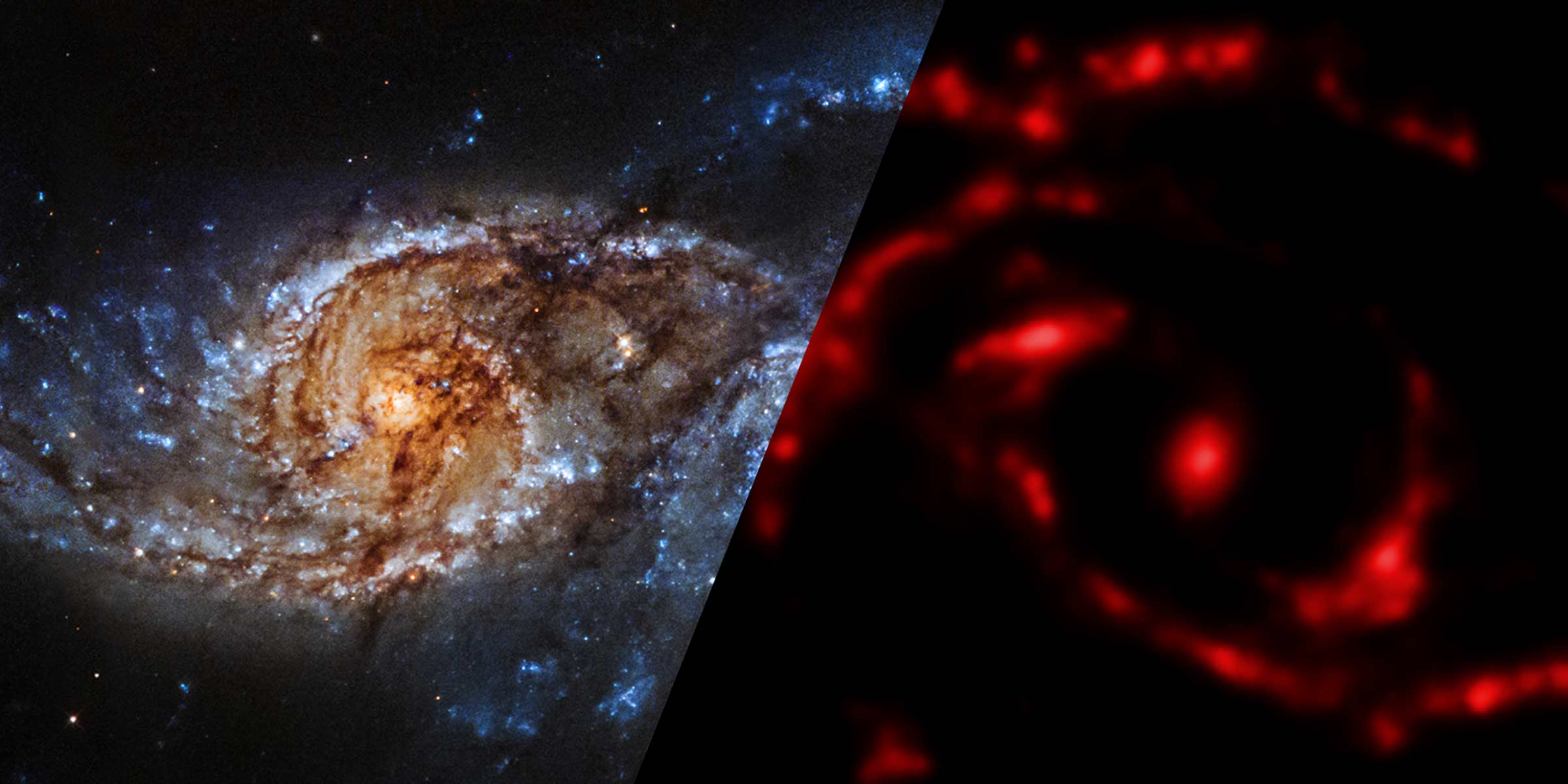
NGC 2207 is a pair of colliding spiral galaxies. Their bright central nuclei resemble a striking set of eyes. In visible light (Hubble), trails of stars and gas trace out spiral arms, stretched by the...
Bring the wonders of the universe to everyone, regardless of their visual ability. A library of many Hubble Space Telescope images has been designed to be downloaded and printed on microcapsule paper,...
Bring the wonders of the universe to everyone, regardless of their visual ability. A library of many Hubble Space Telescope images has been designed to be downloaded and printed on microcapsule paper,...
This movie is formatted for 360 Video. On YouTube, use the mouse to scroll the view. For full immersion, watch using a virtual reality device and a 360-video player.
This visualization journeys into the...
Bring the wonders of the universe to everyone, regardless of their visual ability. A library of many Hubble Space Telescope images has been designed to be downloaded and printed on microcapsule paper,...
On February 22, 2017, NASA announced the discovery of the largest batch of Earth-sized, habitable-zone planets around a single star – TRAPPIST-1A. Further data about these planets was released on...
Bring the wonders of the universe to everyone, regardless of their visual ability. A library of many Hubble Space Telescope images has been designed to be downloaded and printed on microcapsule paper,...
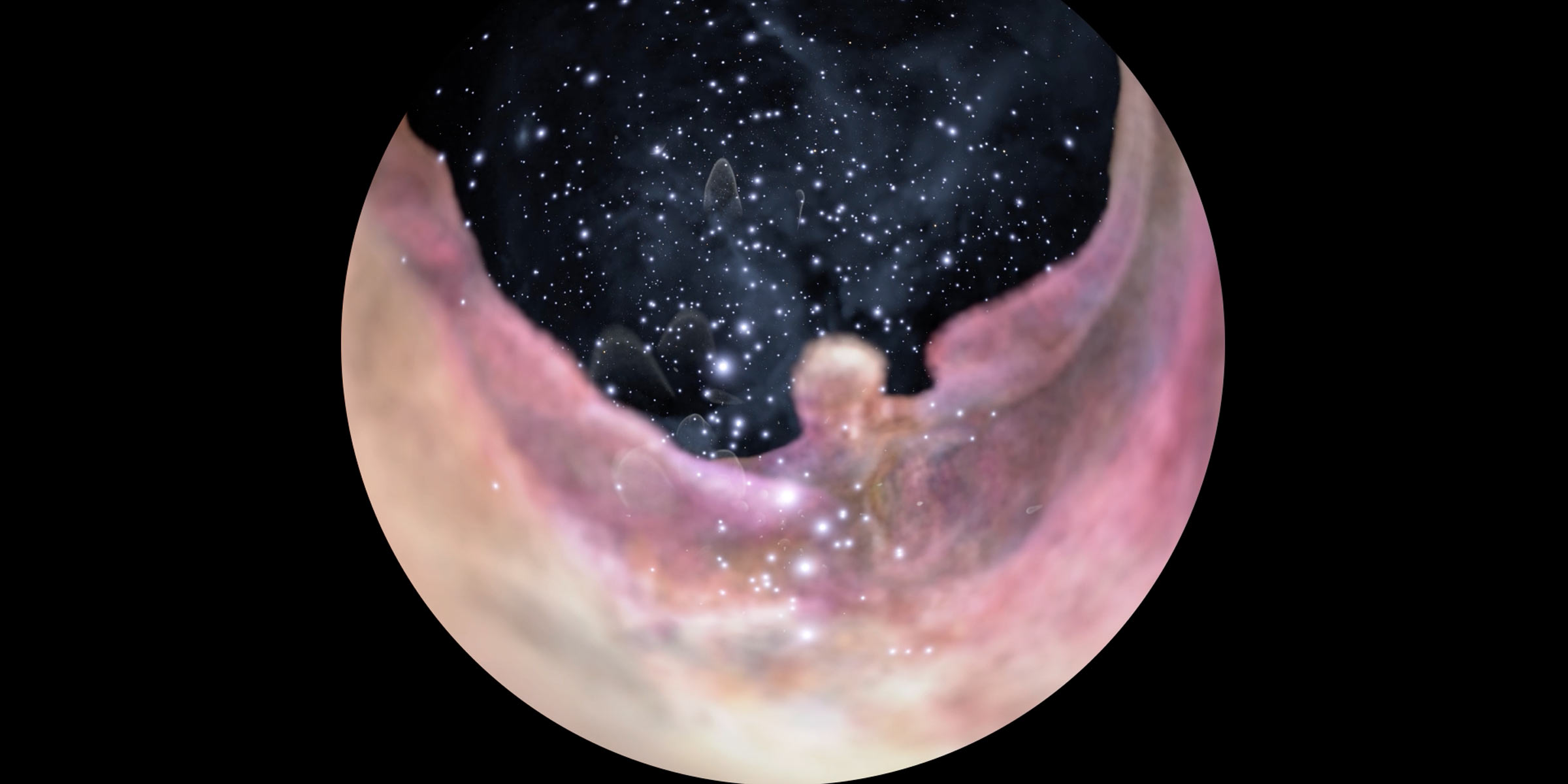
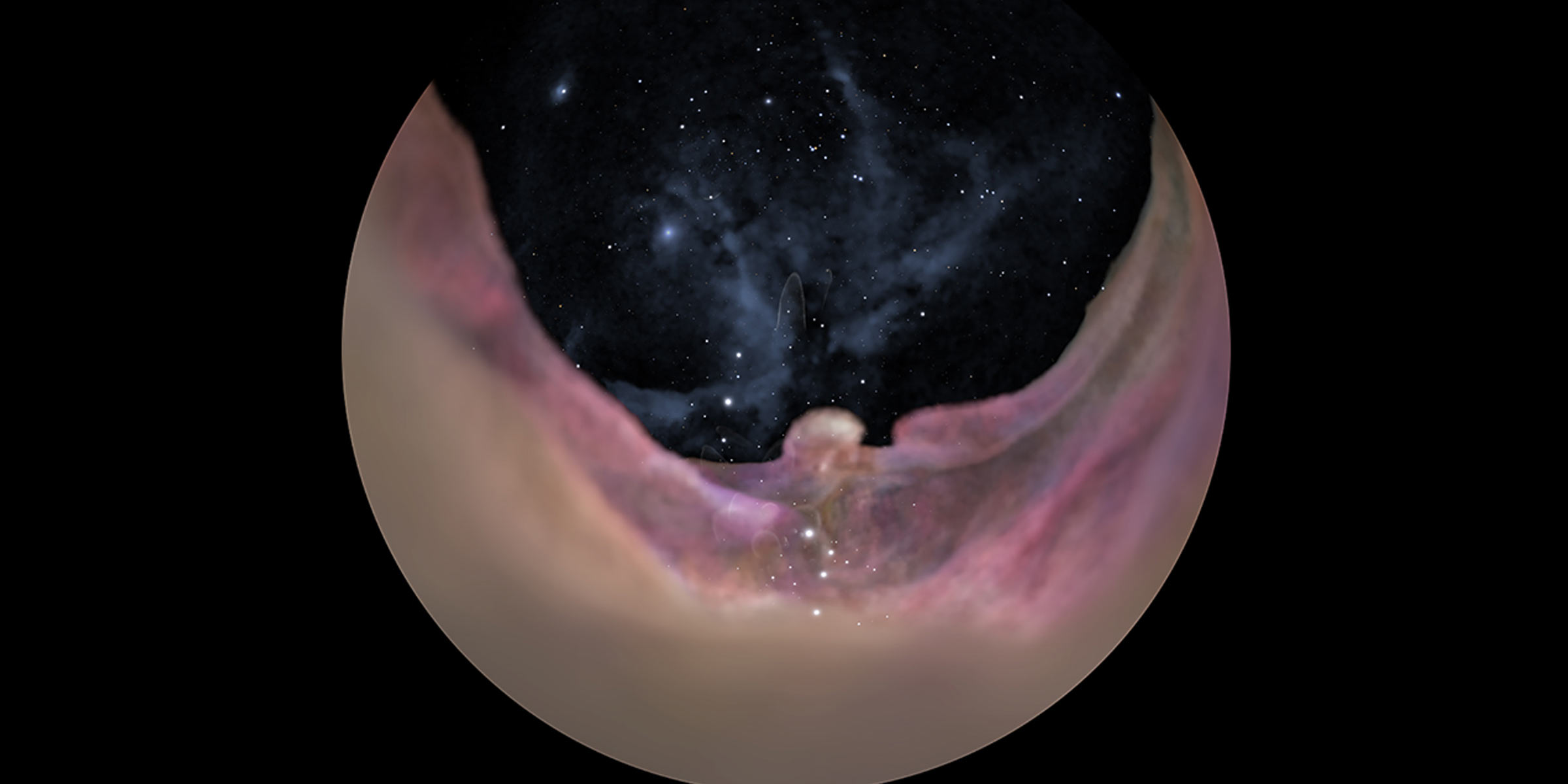
This version of "Journey into the Orion Nebula" has been rendered onto a hemispherical format (azimuthal equidistant projection) for use in planetarium domes. The black circular mask in the images...
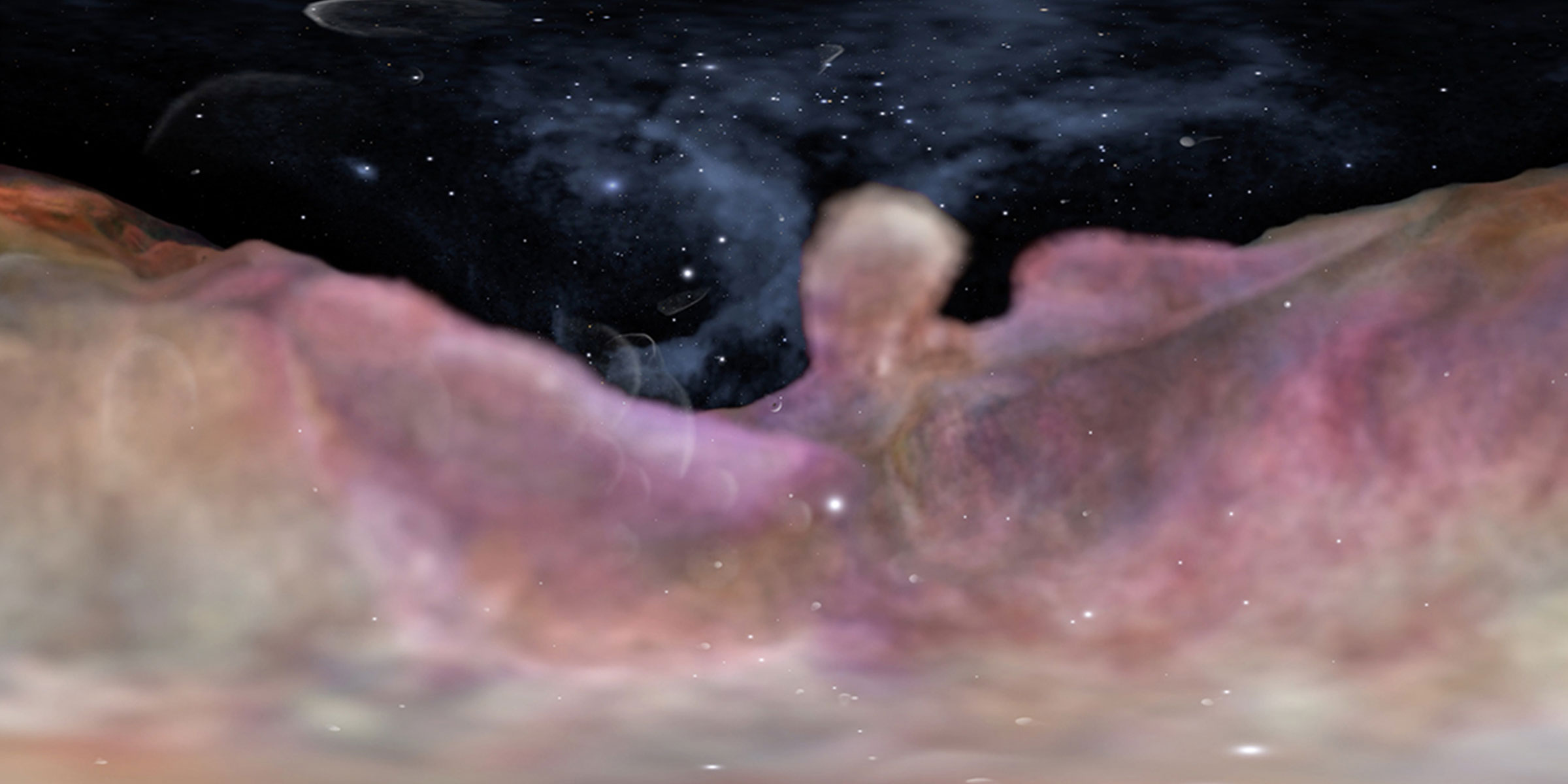
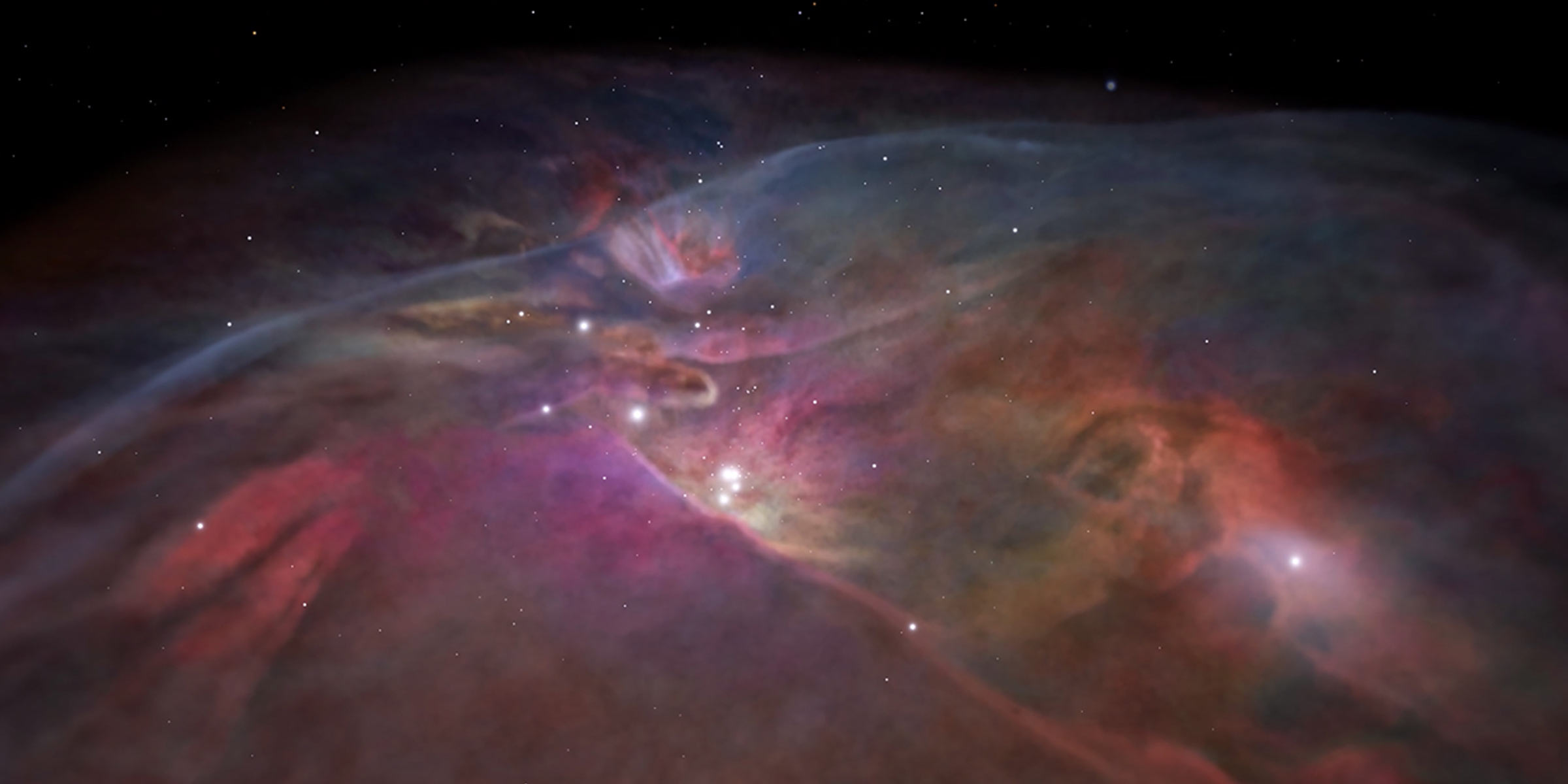
This visualization journeys into the famous star-forming region of the Orion Nebula based on an image from the Hubble Space Telescope. This exhilarating trip begins by flying through a layer of gas above...
Where did life on Earth come from? The answer lies in the stars, which have lives of their own. Stars are responsible for many of the materials that form us and everything around us…
In “Life...
Are microwaves really just a form of light? What exactly is the electromagnetic spectrum? While our eyes can't see most of this spectrum, except for visible light, we have developed technologies such...
Several resources are available to help you use our free image-processing software to enhance your FITS images (taken with either the MicroObservatory Telescopes or other telescope images in FITS format)....
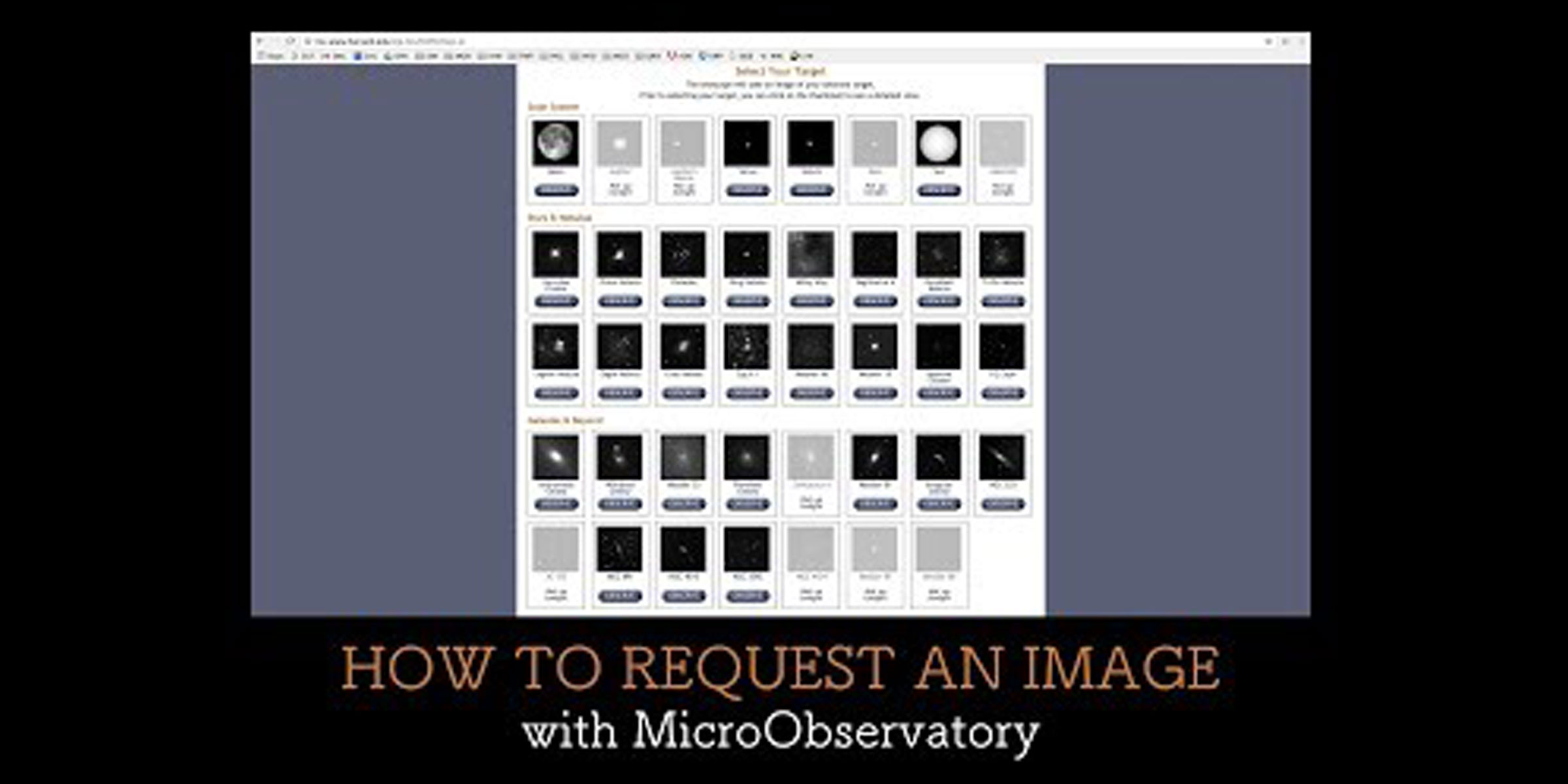
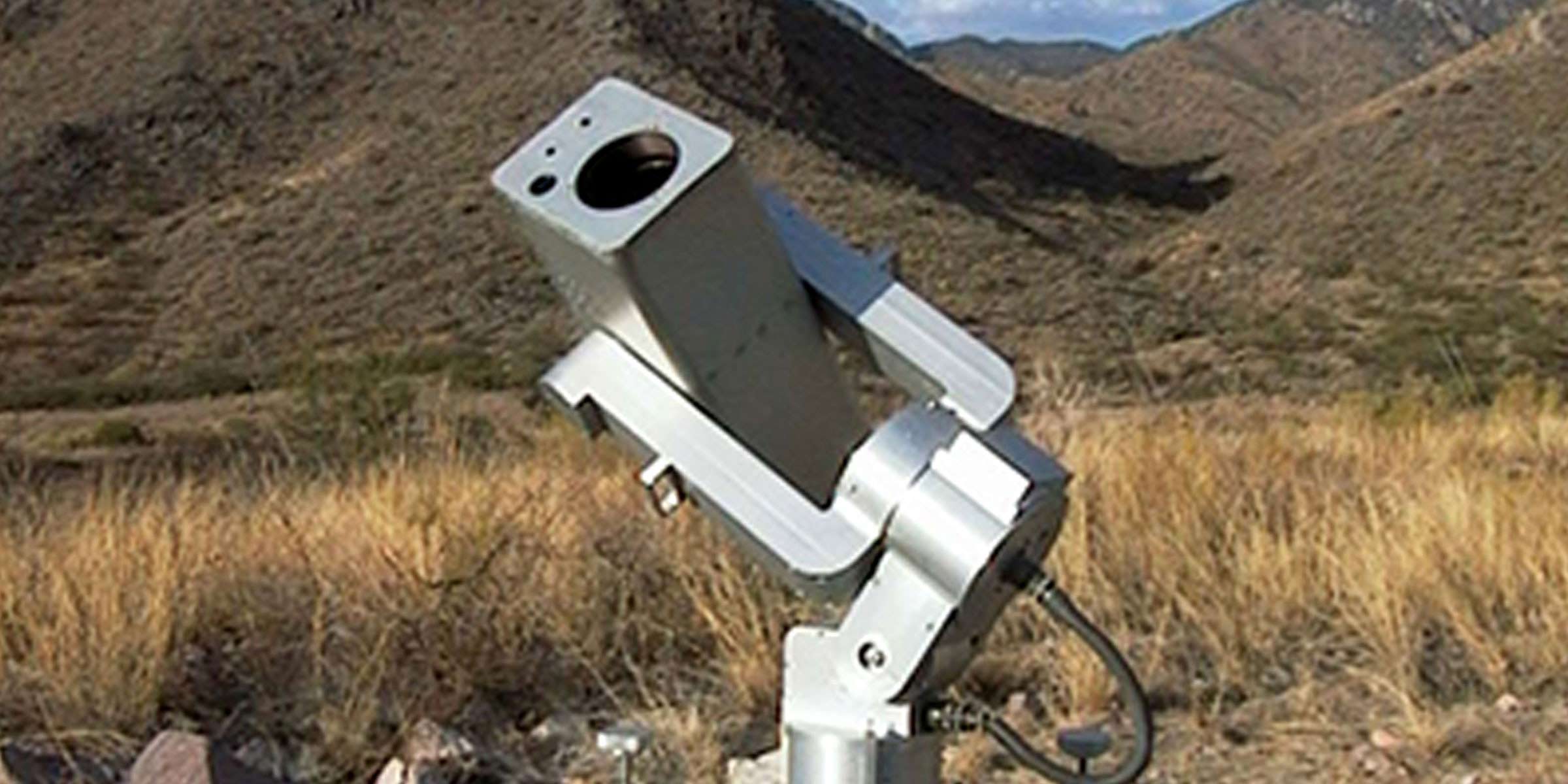
NASA's space science researchers control some of the world's most sophisticated space probes and orbiting telescopes to get amazing images of objects in space. Now YOU can join them by operating...
When scientists combine data from the Chandra X-ray Observatory with other telescopes, such as the Hubble or Spitzer space telescopes, or with scientific and mathematical models, we can create data-driven...
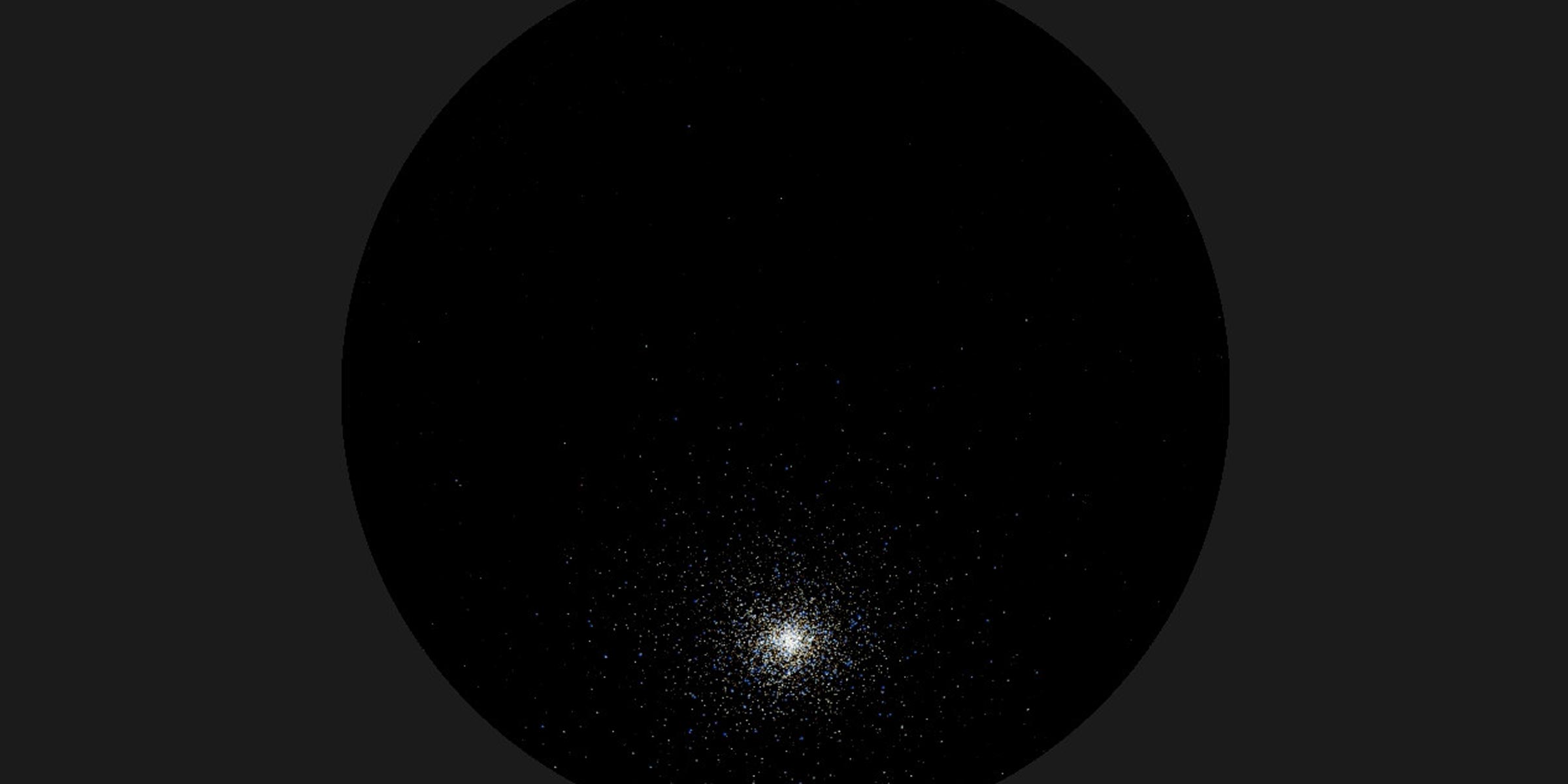
This scientific visualization presents a flight to a small globular star cluster and a few hundred thousand years of its development. Globular star clusters contain many thousands to millions of stars,...
This award-winning short film transforms images and data from NASA's Hubble Space Telescope into a voyage that sweeps viewers across the universe and back into cosmic history.
The film opens with...
Despite our limited abilities to travel to distant objects in outer space, astronomers, computer scientists, and others are developing techniques that nudge astronomy visualization forward from two-dimensional...
Using data from NASA's Chandra X-ray Observatory and other satellites of exploded stars, star-forming regions, and black holes, you'll learn basic coding. By following the video tutorials below,...
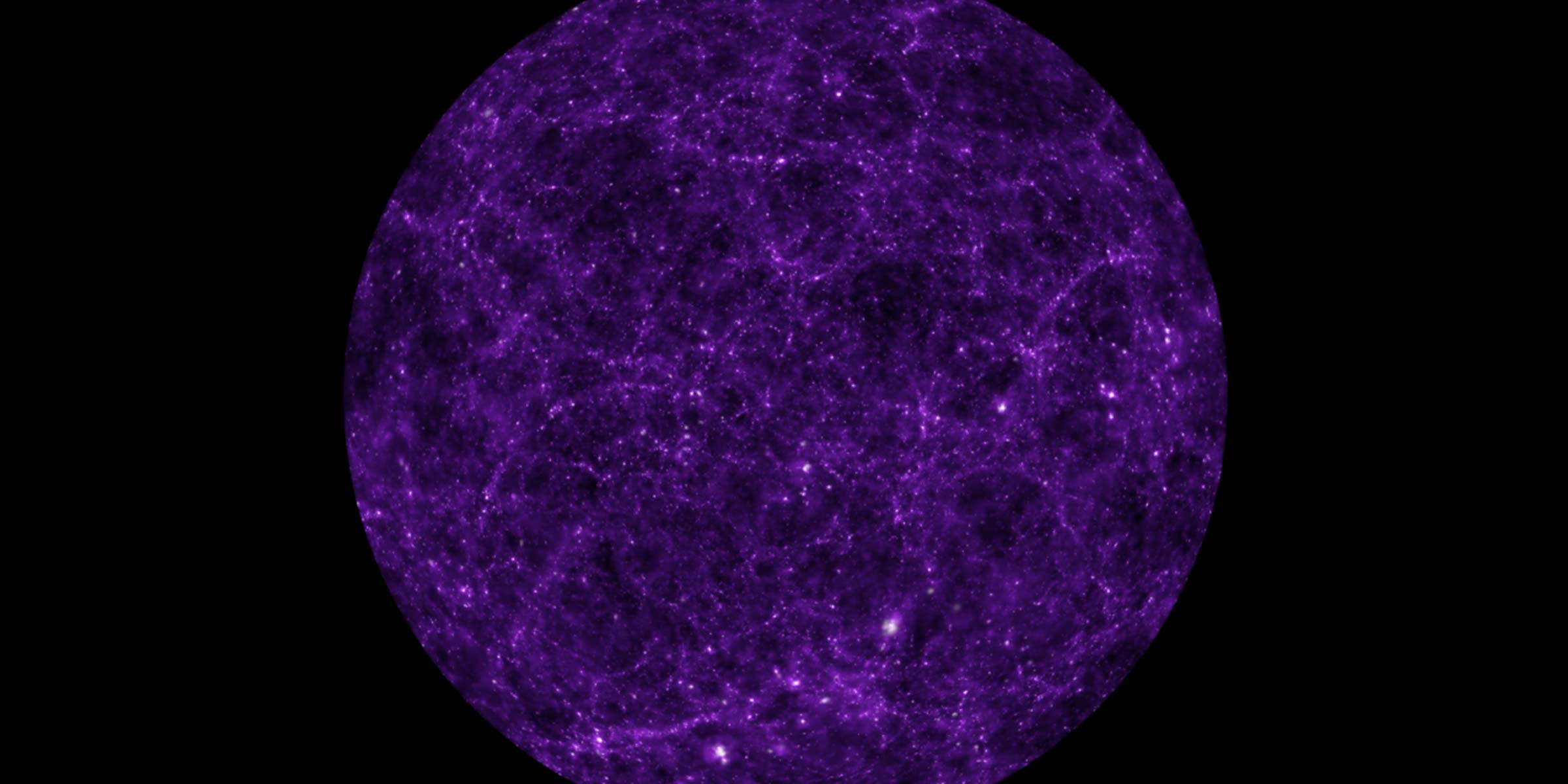
This visualization of a computer simulation showcases the cosmic web, the large-scale structure of the universe. Each bright knot is an entire galaxy, while the purple filaments show where material exists...
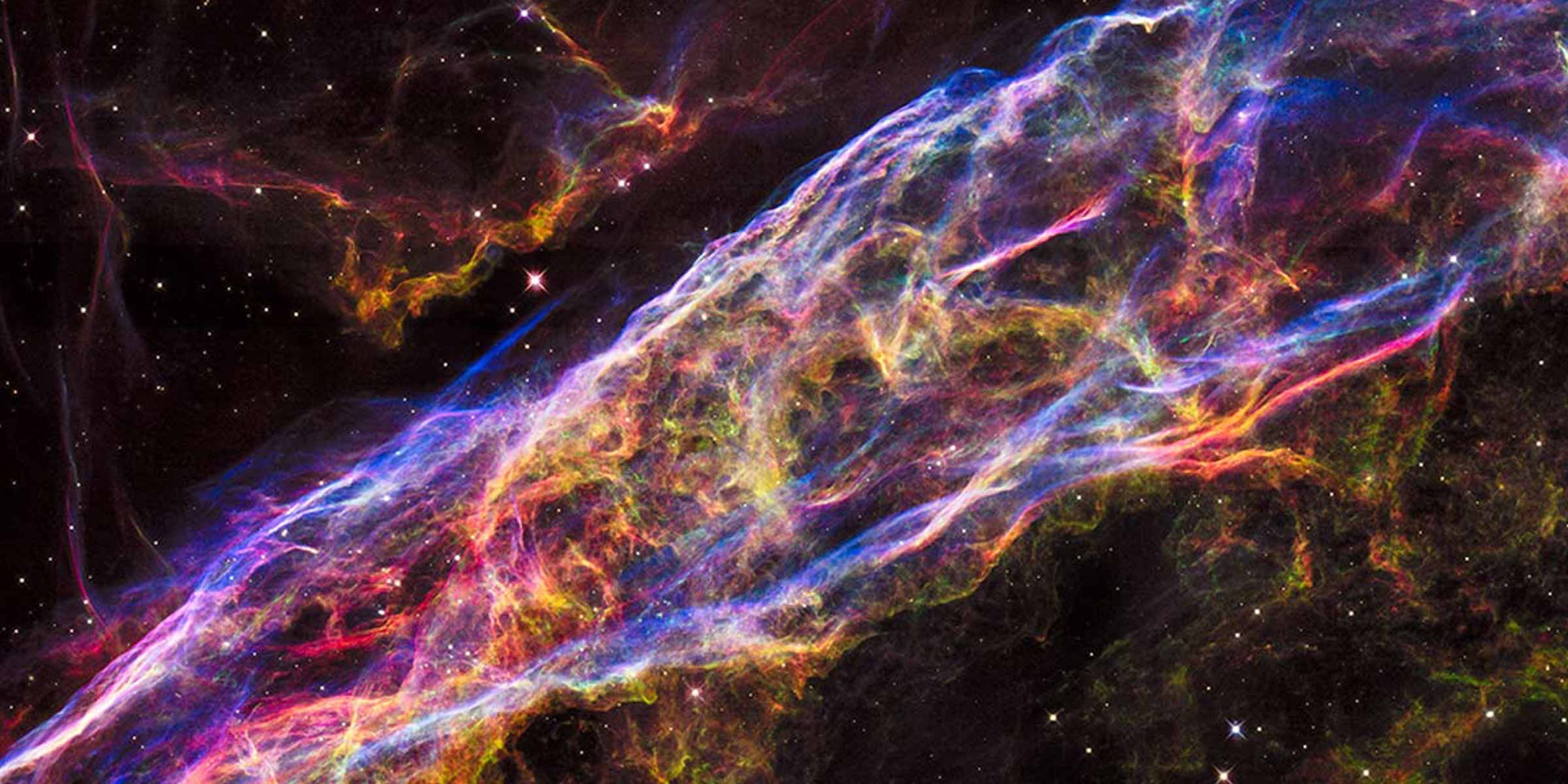
This 3D visualization flies across a small portion of the Veil Nebula as photographed by the Hubble Space Telescope. This region is a small part of a huge expanding remnant from a star that exploded many...
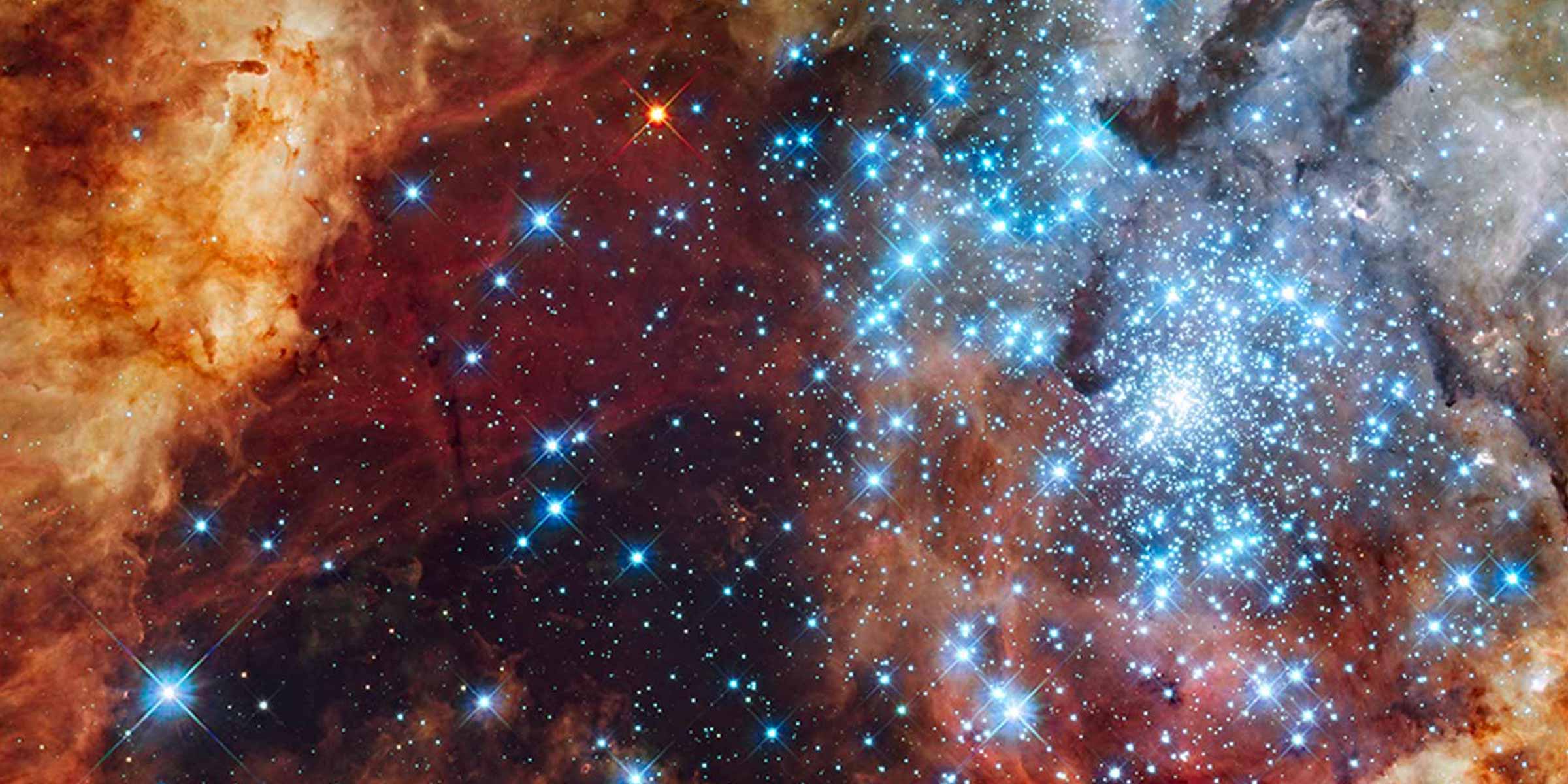
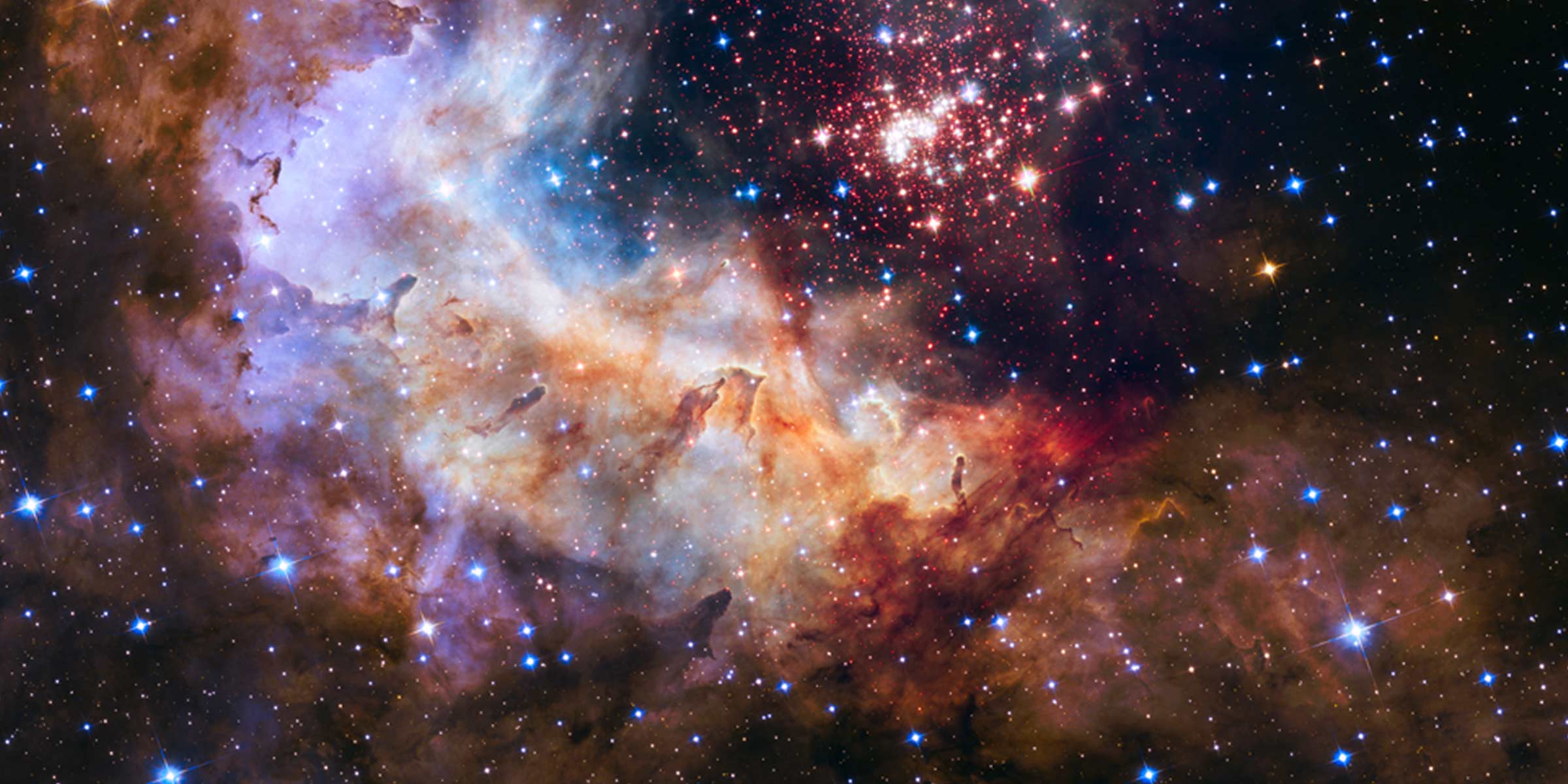
The nebula Gum 29 is a star-forming region about 20,000 light-years away in the Carina constellation. At the core of the nebula is a cluster of several thousand stars called Westerlund 2. These newly formed...
Galaxies are vast swarms of billions of stars along with huge interstellar clouds of gas and dust. A spiral galaxy has a broad, thin disk shape, with a bulge of stars in its core. Within the disk are winding...
The three largest galaxies in our Local Group of galaxies are our Milky Way, Andromeda (also known as Messier 31), and Triangulum (also known as Messier 33) galaxies. This scientific visualization of a...
This scientific visualization of a computer simulation depicts a collision between our Milky Way galaxy and the Andromeda galaxy (also known as Messier 31). Hubble Space Telescope observations indicate...
The light that we see with our eyes – visible light – represents only a small portion of the electromagnetic spectrum. Developing the technology to detect and use other portions of the electromagnetic...
Celestial observers have carefully cataloged the locations of the stars for thousands of years. These atlases often noted the precise positions and brightnesses of individual stars, and were produced by...
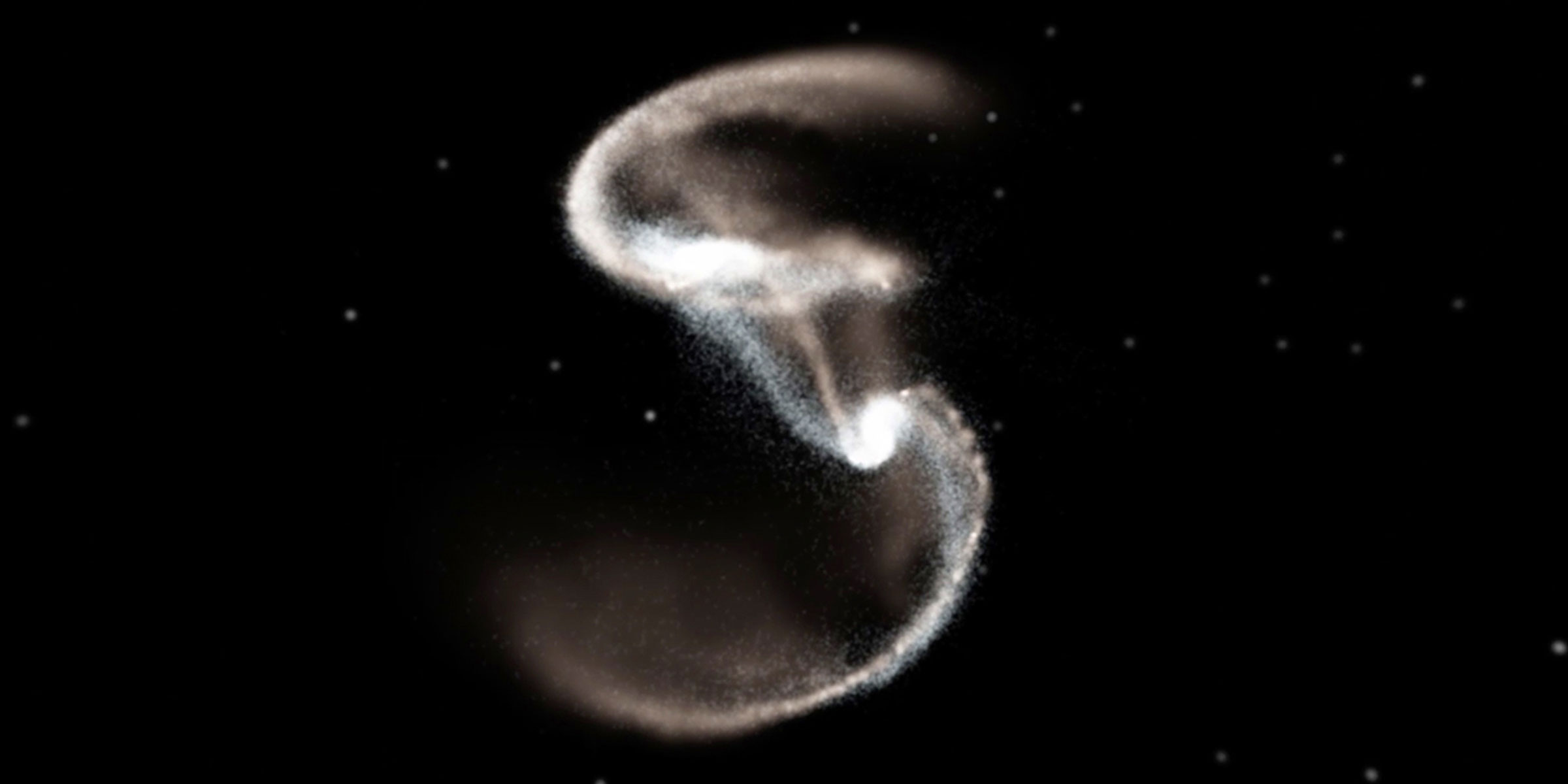
In this scientific visualization, two spiral galaxies are set on a collision course. As one slices through the other, both are disrupted. The tidal forces of gravity produce long tails of material streaming...